Did you know that almost half of all Google searches are looking for local places? That means 46 out of every 100 searches are people looking for businesses near them.
If you have a business, you need to show up on Google. But there are two main ways to do this: Google My Business and Traditional SEO. Both help people find you online. But which one is better for your business?
In this guide, we will look at both options. We will see what makes them different. We will help you pick the right one for your business. Let’s start learning about Google My Business vs SEO.
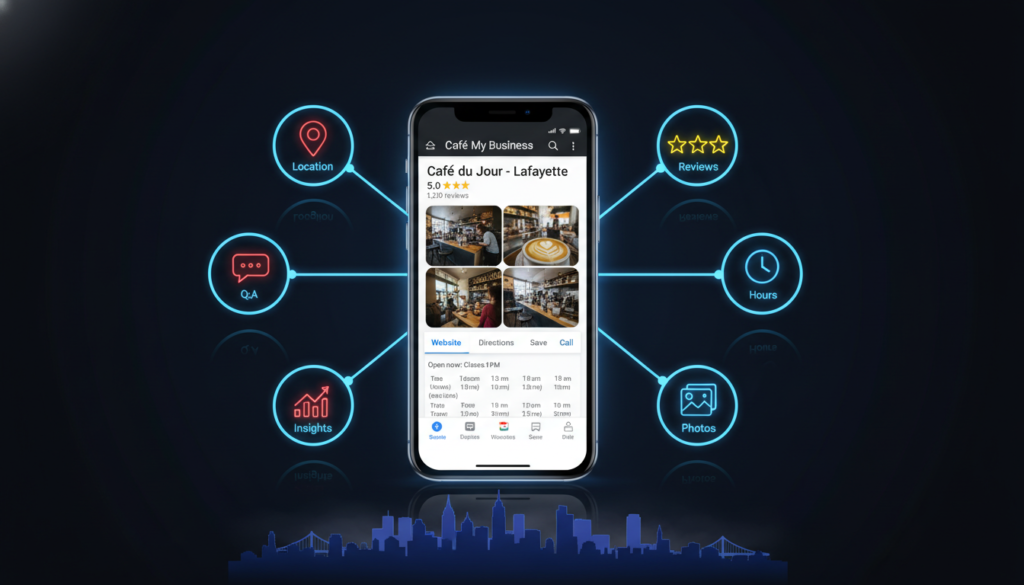
Google My Business is a free tool from Google. It helps local businesses show up on Google Maps and Google Search. When people search for a restaurant, shop, or service near them, Google My Business listings appear first.
Google Maps Visibility: Your business shows up on Google Maps with a pin. People can see where you are located.
Business Information: You can add your name, address, and phone number. This is called NAP information. You can also add your hours, website, and photos.
Customer Reviews: People can leave reviews about your business. Good reviews help you get more customers.
Questions and Answers: Customers can ask questions. You can answer them. This helps people learn about your business.
Posts and Updates: You can share news, offers, and events. These posts show up in your listing.
Numbers and Data: Google My Business shows you how many people saw your listing and how they found you.
Google My Business works great for local businesses. This includes restaurants, shops, doctors, salons, and repair services. If customers come to your location or if you go to their homes, you need Google My Business.
For example, a pizza shop in Lafayette would use Google My Business. When someone searches for “pizza near me,” the shop will show up on the map.
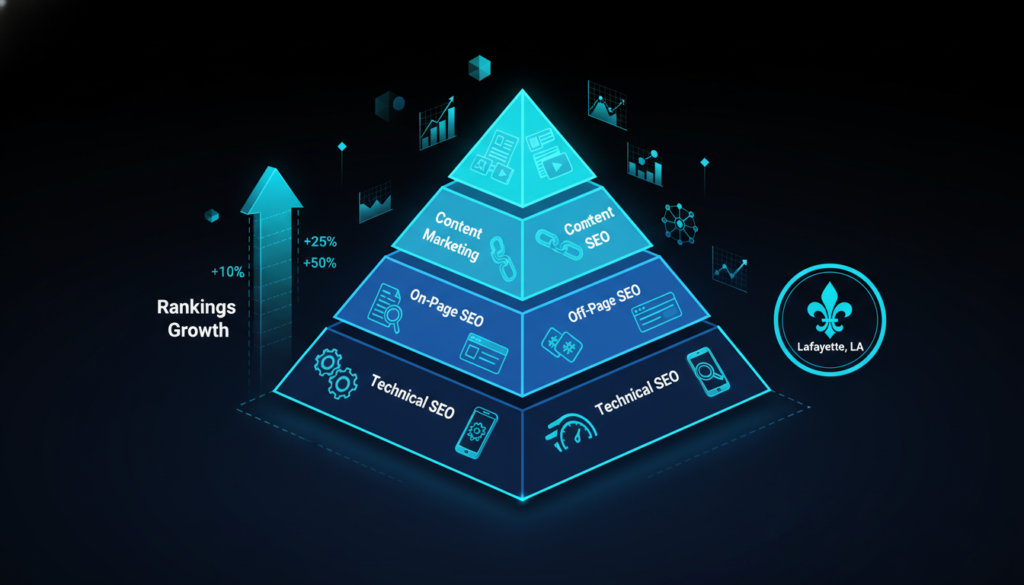
SEO stands for Search Engine Optimization. It is the work you do to make your website show up in Google search results. When people search for something, Google shows a list of websites. SEO helps your website appear higher on that list.
On-Page SEO: This is the work you do on your website. You write good content with the right words. You add titles and descriptions. You make pages that answer what people are searching for.
Off-Page SEO: This is work you do outside your website. You get other websites to link to your site. These links tell Google that your site is good and helpful.
Technical SEO: This makes sure your website works fast and correctly. You make sure it loads quickly. You make sure it works on phones. You fix any broken pages.
Content Marketing: You create helpful articles, videos, and guides. Good content brings people to your website and keeps them coming back.
Traditional SEO is great for online stores, national companies, blogs, and service websites. If you sell products across the country or the world, you need SEO. If you write articles or create content, you need SEO.
For example, an online shoe store that ships everywhere would focus on traditional SEO. They want to show up when anyone in any city searches for “running shoes online.”
Now let’s compare Google My Business and traditional SEO side by side. This will help you see the differences clearly.
| Factor | Google My Business | Traditional SEO |
| Setup Time | Quick (1-2 days) | Slow (3-6 months or more) |
| Cost | Free | Varies (tools, content, links) |
| Geographic Focus | Local only | Local to worldwide |
| Results Timeline | Fast (a few weeks) | Slow (a few months) |
| Maintenance | Low (update once a month) | High (ongoing work needed) |
| Type of Customers | Local, ready to buy | Wider audience, some just browsing |
| Competition Level | Local businesses only | Everyone worldwide |
Where You Show Up: Google My Business puts you on Google Maps and in the local pack. The local pack is the box that shows three businesses at the top of the search results. Traditional SEO puts you in the regular search results below that.
Return on Investment: Google My Business is free and gives fast results. This makes it very cost-effective. Traditional SEO costs money for tools, content writers, and link building. But it can bring customers from anywhere in the world.
Trust Signals: Google My Business uses customer reviews to build trust. People see stars and read what others say. Traditional SEO uses links from other good websites. When big websites link to you, Google trusts you more.
Click Rates: Studies show that local pack results get more clicks than regular results. When people search for local things, they click on Google My Business listings first. Traditional SEO works better when people are just looking for information.
The question is not really Google My Business vs SEO. The real question is: which one fits your business better? Let’s look at different situations.
You have a physical store or office. Customers come to your location to buy or get service. You only want local customers. You don’t ship products or offer services outside your city.
You have a small budget. You want free marketing that works fast. You need customers quickly. You can’t wait months to see results.You run a service business. Examples are plumbers, electricians, hair salons, or restaurants.
Example: A coffee shop in Lafayette should focus on Google My Business. When people search for “coffee near me,” the shop will show up on the map. This brings local customers through the door.
You run an online store. You sell products and ship them anywhere.
You want customers from across the country or the world. Local customers are not your main focus.
Your website has lots of content. You write articles, guides, or blog posts.
You are building a brand for the long term. You can invest time and money now for results later.
You have a budget for tools and content creation. SEO needs ongoing investment.
Example: An online clothing store that ships nationwide should focus on SEO. They want to show up when anyone searches for “summer dresses” or “winter coats,” no matter where they live.
You have a local business with a website. You want both local customers and people who find you online.
You have multiple locations. Each location needs Google My Business. Your website needs SEO to reach more people.
You want maximum visibility. You want to show up everywhere on Google.
You can handle both. You have time or help to manage both strategies.
Example: A dental clinic in Lafayette should use both. They need Google My Business for local patients searching for “dentist near me.” They also need SEO so their website shows up for “teeth whitening tips” or “how to prevent cavities.” This brings in different types of patients.
When you use Google My Business and SEO together, they help each other work better. Here’s how to connect them.
Google My Business Helps Your Local SEO:
When you complete your Google My Business profile, you help your local SEO. Google sees your business name, address, and phone number. This information helps Google understand where you are and what you do.
Keep Your Information The Same Everywhere:
Your business name, address, and phone number should match everywhere. Use the same format on Google My Business, your website, and other directories. This is called NAP consistency. When information matches, Google trusts you more.
Wrong way: One place says “123 Main St,” another says “123 Main Street,” and another says “123 Main St., Suite A.”
Right way: All places say exactly “123 Main Street, Suite A.”
Reviews Help SEO:
Customer reviews on Google My Business help your SEO. Good reviews with your business name and location tell Google that people like your business. This can help you rank higher in search results.
Google My Business Posts Get Indexed:
When you create posts on Google My Business, Google can find them in search. If you write a post about a special offer or event, someone might find it when they search for that topic.
Practical Tips to Connect Both:
Link from your website to your Google My Business profile. Add a button or link that says “Find us on Google Maps.”
Use local keywords on your website. If you are in Lafayette, use words like “Lafayette,” “Louisiana,” or “near me” in your content.
Create location pages. If you have multiple locations, make a page for each one. Add the address, hours, and unique content about that location.
Ask for reviews and share them. When you get good reviews on Google My Business, share them on your website and social media. This helps both your listing and your website.
Many businesses make simple mistakes that hurt their results. Here are the most common mistakes and how to avoid them.
Many businesses create a Google My Business profile but don’t fill it out completely. They skip the description, forget to add photos, or leave the hours wrong. An incomplete profile makes you look unprofessional.
Solution: Fill out every section. Add your business description, choose the right category, upload good photos, and keep your hours updated.
When customers leave reviews, they expect a response. If you ignore reviews, especially negative ones, it looks like you don’t care about customers.
Solution: Reply to all reviews within a few days. Thank people for positive reviews. For negative reviews, apologize and offer to fix the problem. This shows you care.
Using keywords many times will help SEO. They write sentences like: “Lafayette pizza, Lafayette’s best pizza in Lafayette, Louisiana.” This is called keyword stuffing. It looks bad, and Google might punish you for it.
Solution: Use keywords naturally. Write for humans first. If you are talking about Google My Business vs SEO, say it once or twice in a natural way. Don’t repeat it over and over.
Sometimes businesses accidentally create two or more Google My Business listings for the same location. This confuses Google and splits your reviews and ratings.
Solution: Search for your business on Google. If you see duplicate listings, claim them all and then merge or delete the extras. Keep only one listing per location.
If your name, address, or phone number is different on different websites, Google gets confused. This hurts both your Google My Business ranking and your SEO.
Solution: Check all the places your business is listed. Make sure your NAP information matches exactly everywhere. Update any old or wrong information.
Most people search on their phones. If your website is hard to use on a phone, people will leave. This hurts your SEO because Google wants to show websites that work well on mobile.
Solution: Test your website on a phone. Make sure buttons are big enough to tap. Make sure the text is easy to read. Make sure pages load fast.
If you want local customers, you need to talk about local things. Many businesses write general content that could be about anywhere.
Solution: Write about local events, local news, and local problems. Mention your city or neighborhood. This helps both Google My Business and local SEO.
Things are always changing in the world of Google search. Here’s what’s happening now and what to expect in the future.
AI-Powered Search:
Google is using more AI in search results. This means search results are getting smarter. Google can understand what people really want, even if they don’t type the perfect words. For both Google My Business and SEO, this means you need to focus on being helpful and answering real questions.
Voice Search:
More people are using voice to search. They ask their phone or smart speaker questions like: “Where is the closest bakery?” When people talk, they use different words than when they type. Optimize for how people actually talk.
Google Updates:
Google keeps updating how it ranks businesses. For local businesses, Google My Business is becoming even more important. Good reviews, complete profiles, and regular posts help you stay visible.
Mobile-First:
Google now looks at the mobile version of your website first. If your site doesn’t work well on phones, you will rank lower. Make sure your website is fast and easy to use on mobile.
Video Content:
You can now add videos to your Google My Business profile. Videos get more attention than photos. Short videos showing your products, services, or team can help you stand out.
Trust Matters More:
Google wants to show trustworthy businesses. They look at your reviews, your website quality, and if other sites link to you. Building trust takes time, but it’s more important than ever.
So, what’s the answer to Google My Business vs SEO? The truth is, it’s not really an OR choice. It’s an AND choice.
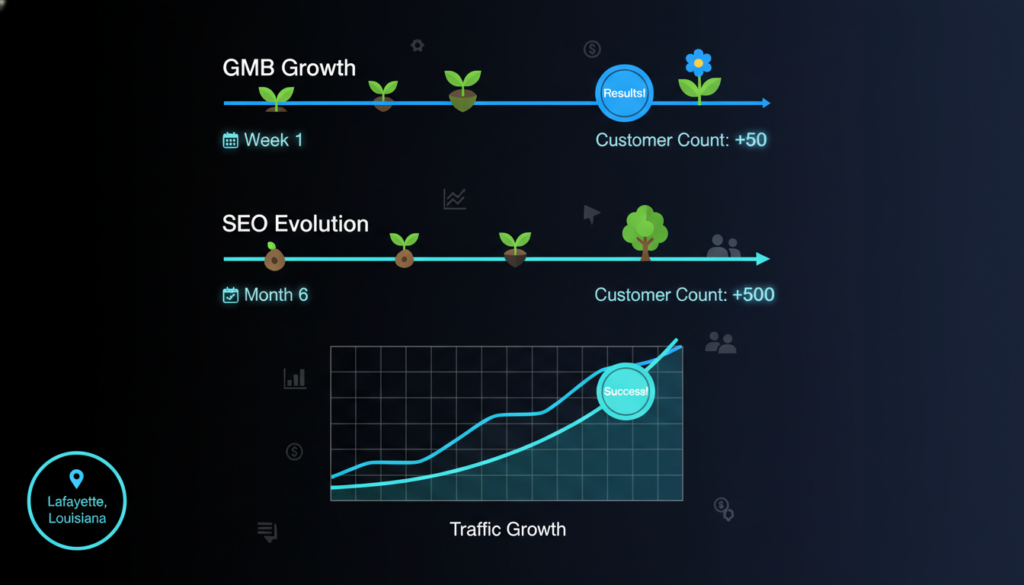
Google My Business is great for local businesses that want fast results. It’s free and easy to set up. If you have a store, restaurant, or service business that serves local customers, start with Google My Business.
Traditional SEO is great for reaching more people beyond your local area. It takes more time and effort. If you sell products online or want to build a big online presence, focus on SEO.
But the best approach for most businesses is to use both. Google My Business gets you local customers quickly. SEO builds your long-term online presence. Together, they help you show up in more places on Google.
If you need contact us setting up your Google My Business or improving your SEO, we can help you grow your business online.
Google My Business is a free tool that helps local businesses show up on Google Maps and in local search results. It works fast and focuses on customers near your location. Traditional SEO helps your website rank in regular Google search results for people anywhere in the world. SEO takes more time but reaches a wider audience.
Google My Business is completely free. You don’t have to pay anything to create your profile, add photos, get reviews, or show up on Google Maps. Traditional SEO can cost money for tools, content creation, and link building, but Google My Business costs nothing.
Google My Business shows results quickly. You can start appearing on Google Maps within 1-2 weeks after setting up your profile. Traditional SEO takes much longer. It usually takes 3-6 months or more to see good results because you need to build content, get links, and earn Google’s trust.
Yes! Using both together is the best strategy for most local businesses. Google My Business brings local customers who are ready to buy right now. SEO builds your long-term online presence and brings customers searching for information. When you use both, you show up in more places on Google and get more customers.
No, you don’t need a website to use Google My Business. You can create a profile with just your business name, address, phone number, and photos. However, having a website helps a lot. You can link to your website from your Google My Business profile, and this helps both your local visibility and your SEO.