
Home / Blog Details
Take your digital marketing to the next level with data-driven strategies and innovative solutions. Let’s create something amazing together!

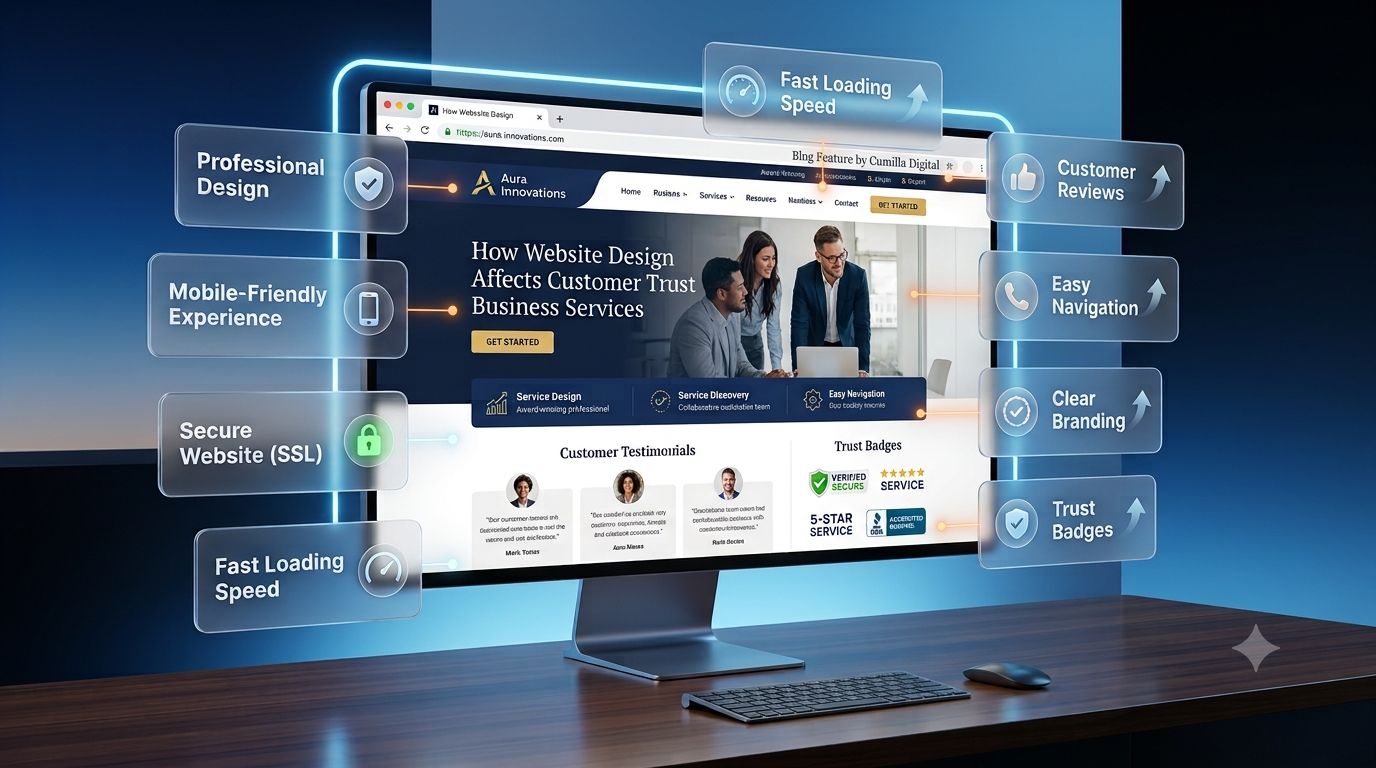
From Google search results to AI chatbots, we optimize your website so customers can find you faster — and choose you over competitors.
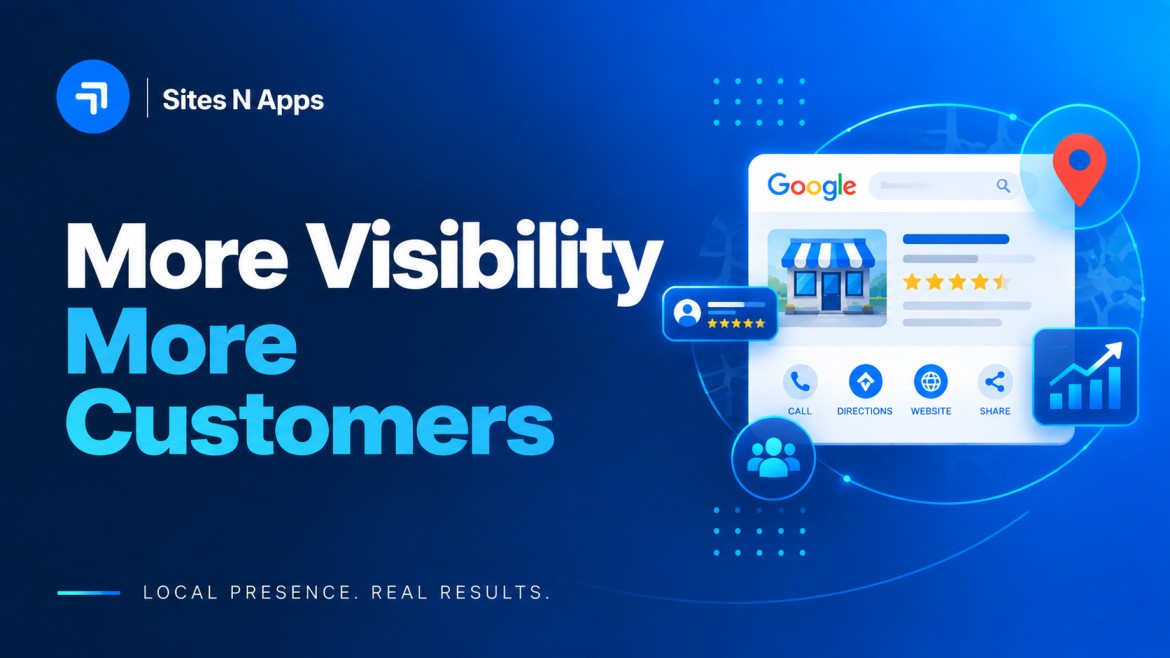
Most people decide who to call before they ever visit a website. They search a service and a city, glance at the map results at the top of the page, compare three businesses on stars, photos, and hours, and tap the one that looks most legitimate. That decision often takes under a minute.
Your Google Business Profile is what they are judging. It is the only asset you control that appears in Google Search and Google Maps without requiring a click, and for most local businesses it produces more customer contact than the website does.
The problem is that most profiles are set up once and abandoned. The business name goes in, one photo gets uploaded, and nothing changes for two years. Meanwhile, the businesses ranking above them are adding services, publishing updates, collecting fresh reviews, and answering questions every week. That gap is not luck or budget. It is process.
This guide covers both halves of that process: how to optimize every section of your profile properly, and how to run it as an ongoing local SEO strategy that keeps producing calls, direction requests, and website visits.
Google Business Profile (GBP) is Google’s free tool for managing how your business appears across Google Search and Google Maps. It was called Google My Business until Google renamed it in 2021; same product, newer name. If you still see “Google My Business optimization” or “Google My Business strategy” used online, it refers to this same profile.
Your website is property you own. You control the design, the content, the structure, and the conversion path, and nobody can edit it but you.
Your profile is different. Google hosts it, Google displays it, and the public can contribute to it , customers leave reviews, upload their own photos, and post questions, and users can even suggest edits to your business information. You manage a profile rather than owning it, which is exactly why it needs active attention.
The other difference is placement. A website has to earn a click. A profile appears fully formed inside the results page, with your rating, hours, phone number, and directions already visible.
When a search has local intent, a service plus a city, or anything with “near me” , Google usually answers it with a map and a short set of nearby businesses above the normal results. That block is where most local clicks go, and your profile is the primary thing that determines whether you appear in it.
The same profile data powers Google Maps, which is where a large share of local discovery happens on mobile. One well-maintained profile serves both surfaces.
Trust is decided on the results page, not on your website. A profile with a current photo set, dozens of recent reviews, visible responses from the owner, and complete hours reads as a real, working business. A profile with no photos, four reviews from 2022, and no description reads as risky, even if the business is excellent.
Google has said that complete profiles are significantly more likely to be seen as reputable by searchers, which matches what happens in practice: completeness is a conversion advantage, not just a ranking one.
A profile is not a billboard. Every element on it is a potential action, and Google reports each one back to you:
That reporting is what makes GBP optimization accountable. You can tie the work you do to the contacts it produces.
Google evaluates local businesses using three broad factors it describes publicly: relevance, distance, and prominence. It does not publish weightings, and anyone offering you an exact ranking formula is guessing. But understanding the three factors tells you where your effort should go.
Relevance is how closely your profile matches what someone actually searched. If a person searches “emergency HVAC repair” in your city, Google is looking at whether your category, services, description, and profile content clearly say that you do emergency HVAC repair there.
You improve relevance with accurate categories, complete service listings written in plain language, and a description that names what you do and where you do it.
Distance is the gap between the searcher’s location and yours. Google uses the location terms in the query when they exist, and the device location when they do not.
You cannot move your business. You can make sure Google knows precisely which areas you serve by configuring your service area correctly and supporting it with location-relevant content on your website.
Prominence is how established and trusted your business appears across the web , review volume and rating, how recently those reviews arrived, consistent mentions of your business on other reputable sites, your website’s authority, and how people engage with your profile.
Prominence is the slow factor, and the one competitors cannot copy quickly. It rewards consistency more than any single tactic.
They are weighed as a set. A business with strong relevance but almost no prominence can lose to a slightly less relevant business with a deep, active review profile. That is why an optimization checklist alone is not enough , it fixes relevance, and prominence needs an ongoing strategy.
One more distinction worth naming: discovery searches are category searches from people who do not know you yet (“web design company near me”), while branded searches are people looking for you specifically. Discovery searches are where new customers come from, so that is where profile optimization pays off most.
None of the rest matters until the profile is yours. Search for your business in Google Business Profile Manager and claim the existing listing if Google has already generated one; create it if not.
Google then verifies ownership by postcard, phone, email, or a short video of your premises, depending on the business type. If someone else has claimed your listing, request access through Google rather than creating a second one. Duplicate listings split your signals and can get both suppressed.
Google treats completeness as a signal, and customers treat gaps as a warning. Fill in all of it:
Then make it consistent everywhere else. Your name, address, and phone number (NAP) should match character for character across your website, your profile, social accounts, and every directory you appear in. “Suite 500” in one place and “Unit 500” in another is the kind of small contradiction that makes Google less confident about which data is correct, and lower confidence means lower placement. Fix existing inconsistencies before adding new listings anywhere.
Your primary category is the single most consequential field in the profile. It largely determines which searches you are eligible to appear in, so pick the most specific category that genuinely describes your core business. A bakery that also sells coffee is a bakery, not a coffee shop. A firm that builds websites is a web designer, not a marketing agency.
Secondary categories widen your relevance for adjacent searches. Add every one that legitimately applies, but only those. Unrelated categories confuse Google’s read of what you do and can cost you visibility in the searches that actually matter.
You get 750 characters. Use all of them, and write for a customer who has never heard of you.
State what you do, who you serve, where you serve them, and one concrete reason to choose you: years in business, a credential, a specific outcome. Mention your service location naturally in the first sentence or two. Skip promotional language and links; Google’s guidelines reject them.
Keyword stuffing here is counterproductive. Read the description out loud. If it sounds like a list of search terms rather than a sentence a person would say, rewrite it.
Most businesses leave these sections empty, which is one of the easiest advantages to hand a competitor. Every service you add gives Google more specific vocabulary to match against searches, and gives customers a reason to stop comparing.
List each service separately rather than bundling everything into one entry. Give each one a real description explaining what it includes, who it suits, and what the customer ends up with. Add pricing where you can , it filters out mismatched enquiries before they reach you.
Photos are the fastest trust signal on the profile, and Google has reported that listings with photos see more direction requests and website clicks than listings without.
Cover the set:
Use your own photography. Stock images are recognisable, and they undercut the exact trust you are trying to build. Keep adding new images; a couple every month is enough to keep the profile looking active, and fresh visuals consistently outperform a set that has not changed in a year.
Reviews affect both how you rank and whether anyone chooses you. Consumers overwhelmingly read reviews before contacting a local business, and most weigh them close to a personal recommendation.
Requesting them: build the ask into your workflow instead of leaving it to memory. Ask in person immediately after a good experience, follow up with a text or email containing your direct review link within a day, put that link in your email signature, and make sure every customer-facing team member knows to ask.
Responding: answer every review, positive or negative, within a couple of days. Thank positive reviewers by name and reference the specific thing they mentioned. For negative reviews, acknowledge the problem, avoid arguing in public, and give a direct contact so the conversation can continue privately. Your response is written for the next customer reading it, not for the reviewer.
Never buy reviews, incentivise them, or post them yourself. It violates Google’s policies, it risks the profile, and fake reviews are easier to spot than most business owners assume.
Anyone can ask a question on your profile, and anyone can answer it , including people who know nothing about your business. An ignored Q&A section is a place where wrong information becomes the official-looking answer.
Get ahead of it. Post the questions customers actually ask, answer them properly from your business account, and check weekly for new ones.
Posts appear directly on your listing and are the simplest way to signal that the business is active. Use them for:
One post a week is a reasonable floor. Include an image, a specific headline, a short body, and a call-to-action button pointing at the relevant page of your site.
Enable messaging only if someone can reply within a few hours; Google displays your typical response time publicly, and a slow one discourages contact. Set an after-hours auto-reply so nobody is left waiting silently.
If you take appointments, connect your booking system or link your booking page. Every step you remove from the path between “interested” and “scheduled” raises the number of people who finish it.
Optimization is what you do once. Strategy is what keeps the results. The profiles that hold top local placements are not better optimized than yours by a wide margin; they are simply maintained more consistently.
Set a recurring reminder to check hours, services, and contact details. Update holiday hours before the holiday rather than after Google prompts you. Nothing costs more goodwill than a customer arriving at a closed door because your listing said otherwise, and Google is also less likely to accept user-suggested “corrections” to a profile you keep current.
Review recency matters, not just the total. A profile with 40 reviews and eight from the last month often outperforms one with 200 reviews and nothing in the last six. A hundred reviews collected in one push, followed by silence, looks worse than a steady handful every month.
Make it a monthly number you actually track. Decide when in the customer journey you ask, who asks, and what the follow-up looks like. Then read the reviews you receive; repeated praise tells you what to put in your marketing, and repeated complaints tell you what to fix. It is the cheapest customer research you will ever get.
For businesses handling review volume at scale, this is where a documented review and reputation management process earns its keep.
Keep a simple content rhythm rather than posting whenever you remember: business updates, new services, seasonal information, offers with real deadlines. Pair each post with a photo so it contributes to both your posting and visual activity at once.
Prominence is built outside the profile as much as inside it:
Once a quarter, search your main keyword from your service area and open the top three listings. Note their primary and secondary categories, review count and recency, photo volume, posting frequency, and whether they respond to reviews.
Every gap you find is a task list. And look for the weak profiles too; competitors with no recent posts, unanswered reviews, and empty service sections are the positions you can take first while you build toward the stronger ones.
Your profile’s performance data is the feedback loop for everything above. Review it monthly and watch trends rather than single weeks:
Add UTM parameters to the website URL in your profile so analytics can separate profile-driven traffic from the rest of your organic traffic. If you want call-level detail, use a distinct tracked number on the profile.
Then read the numbers as diagnostics. Direction requests falling usually means an information problem. High views with few calls usually means a trust or presentation problem: thin photos, weak reviews, no description. Change one thing at a time and give it a few weeks before judging it.
| Frequency | Tasks |
| Daily (10–15 min) | Respond to new reviews and messages; check notifications for user-suggested edits |
| Weekly | Publish one post; add two to four photos; add or update a Q&A entry |
| Monthly | Review performance data; check review acquisition rate; verify all business information; update seasonal services |
| Quarterly | Competitor analysis; NAP audit across directories; re-check category selections; add any new attributes Google has introduced |
Your profile is a major part of local SEO, not a replacement for it. On its own, it will not guarantee rankings; nothing will, but it is usually the fastest route to first-page local visibility, and it makes the rest of your SEO work harder.
Local pack visibility. Profile signals carry substantial weight in the local results block. For most local businesses, a well-optimized profile competes for that space sooner than a new website can compete for standard organic positions.
Trust signals that travel. Reviews, ratings, photos, and response activity are visible before anyone reaches your site, which means they influence click-through to everything else you rank for.
Website and profile working together. These two need to agree and reinforce each other:
That alignment is why web design and SEO have to be planned together rather than sequentially, and why a site built without local search in mind tends to hold its profile back.
Incomplete profile. Every empty field is a lost relevance signal to Google and a small doubt for the customer. Missing hours, no description, no services, and no photos together read as a business that may not be operating.
Wrong categories. A category that is too broad, or simply inaccurate, quietly removes you from the searches you most want. It is the most common reason a profile that looks fine underperforms.
Ignoring reviews. No new reviews suggest low customer volume; unanswered negative reviews suggest indifference. Both reduce the number of people who contact you, which reduces the engagement signals that support your visibility.
Inconsistent business information. Conflicting NAP data across the web makes it harder for Google to establish which details are authoritative, and inconsistency at scale weakens your local footing.
Creating multiple listings. Duplicates divide reviews, photos, and engagement across two profiles instead of concentrating them in one, and Google may suppress both. If a duplicate exists, merge or remove it rather than maintaining it.
Not updating the profile. A profile with no posts, no new photos, and no responses for months looks dormant. Active profiles routinely outperform inactive ones that have longer histories and more total reviews.
Guideline violations that risk suspension. Keyword-stuffed business names, addresses that are not real staffed locations, virtual offices presented as premises, and incentivised reviews can all get a profile suspended, which removes it from search entirely while you appeal. If competitors appear to be doing these things, report them rather than copying them.
☐ Complete every profile section, including services, attributes, and description
☐ Choose the most specific, accurate primary category, plus relevant secondary categories
☐ Add real business photos and refresh them monthly
☐ Collect genuine reviews on a consistent monthly cadence
☐ Respond to every review, message, and question
☐ Update information regularly, including holiday hours
☐ Keep NAP identical across your website, profile, and all directories
☐ Publish at least one post per week
☐ Monitor performance data monthly and act on the trends
Google Business Profile is Google’s free tool for managing how your business appears in Google Search and Google Maps. It controls your business information, reviews, photos, posts, and the ways customers contact you: calls, messages, direction requests, and bookings. It was previously called Google My Business.
Yes. Creating, verifying, and managing a profile costs nothing, and every core feature is included: posts, messaging, reviews, products and services, and performance reporting. There is no paid tier that improves your placement.
Claim and verify the profile, then complete every field: accurate NAP, hours, service areas, attributes, a full 750-character description, and detailed service listings. Choose the most specific, accurate primary category. Add real photos across exterior, interior, team, and work. Then maintain it: collect reviews consistently, respond to all of them, post weekly, keep the Q&A section accurate, and review your performance data monthly.
It has a strong effect on local search, the map results, and Google Maps, and an indirect effect on the rest of your SEO by driving traffic, generating brand searches, and strengthening your reputation signals. It works best alongside a website optimized for local search rather than in place of one, and no profile guarantees rankings on its own.
Update business information immediately whenever anything changes, and set holiday hours in advance. Beyond that: respond to reviews and messages daily, post and add photos weekly, and review performance data and information accuracy monthly, with a fuller audit each quarter.
Completing a thorough optimization pass takes a few focused hours. Results usually appear in stages: movement in profile views and search impressions within roughly one to two months, and meaningful local placement improvement typically over three to six months, depending on your market’s competitiveness and how consistently you maintain the profile. Prominence, in particular, compounds over quarters rather than weeks.
It depends on the method. Phone and email verification can be completed in minutes. Video verification is usually reviewed within a few days. Postcard verification generally takes one to two weeks.
One is a reasonable minimum; two, typically one offer or update and one informational post, produces stronger engagement. Consistency matters more than volume. A steady weekly rhythm outperforms a burst of posts followed by a month of nothing.
Yes, on both fronts. Responding signals an actively managed profile, and it adds relevant text to your listing. It also affects behaviour directly; a large majority of consumers read how businesses reply to reviews, and the reply is what your next potential customer sees.
If your profile has been sitting untouched, three things produce the fastest change: fill in every empty field, correct your primary category to the most specific accurate option, and start asking for reviews this week rather than next month. Those three address most of the reasons a profile underperforms.
After that, it becomes maintenance: a few minutes daily, a post and some photos weekly, a look at the numbers monthly. That is genuinely the difference between the businesses in the top three local results and the ones on page two.
At Sites N Apps, we build the profile, website, and local SEO systems that produce measurable local leads , from full profile optimization and review processes through to websites designed to earn customer trust and support local search performance.
Want a second opinion on your profile? Get in touch for a Google Business Profile audit.
External references: Google Business Profile Help Center | How Google determines local ranking | Moz Local Search Ranking Factors | BrightLocal Local Consumer Review Survey
Struggling to compete for high-search-volume keywords? We help businesses like yours increase visibility, drive more traffic, and dominate competitive search terms—all while keeping your costs low. Our proven strategies focus on long-term growth and measurable results.