
Picture this: a potential customer searches online for a product or service you offer. They find two websites. The first loads instantly, looks polished, and is effortless to use on their phone. The second is slow, visually outdated, and hard to navigate. Which business gets the call?
That decision happens in under five seconds, and it is happening with your potential customers right now, every single day.
In 2026, your website is far more than a digital business card. It is your storefront, your sales team, and your brand’s first impression all at the same time. And with web design trends evolving faster than ever, businesses that stay current will keep winning customers while those that fall behind will lose them without ever knowing why.
At Sites N Apps, we work with businesses across different industries, and we see firsthand how a smart, well-designed website transforms online results. This guide covers the top web design trends for 2026, not just what they are, but how to actually apply them to your business so you get real results.
Before jumping into the list, let’s clear up a common misconception: following web design trends does not mean chasing every flashy new thing on the internet. It means understanding which modern design approaches can genuinely help your business attract more visitors, keep them engaged longer, and turn them into paying customers.
The right trends for a law firm look very different from what works for an e-commerce store or a local restaurant. And the best businesses in 2026 are not the ones trying to use every trend; they are the ones picking the right two or three and executing them really well.
Before your next website update, ask yourself these honest questions:
• Does my website load in under 3 seconds on a smartphone?
• Can a new visitor understand what I offer within 5 seconds of landing on my homepage?
• Does my site reflect the personality and values of my brand?
• Is my website accessible to users with disabilities?
• Does it rank well in search engines for my target audience?
• Does it look and feel modern compared to my competitors?
If you answered ‘no’ to any of those, the web design trends below are exactly what you need.
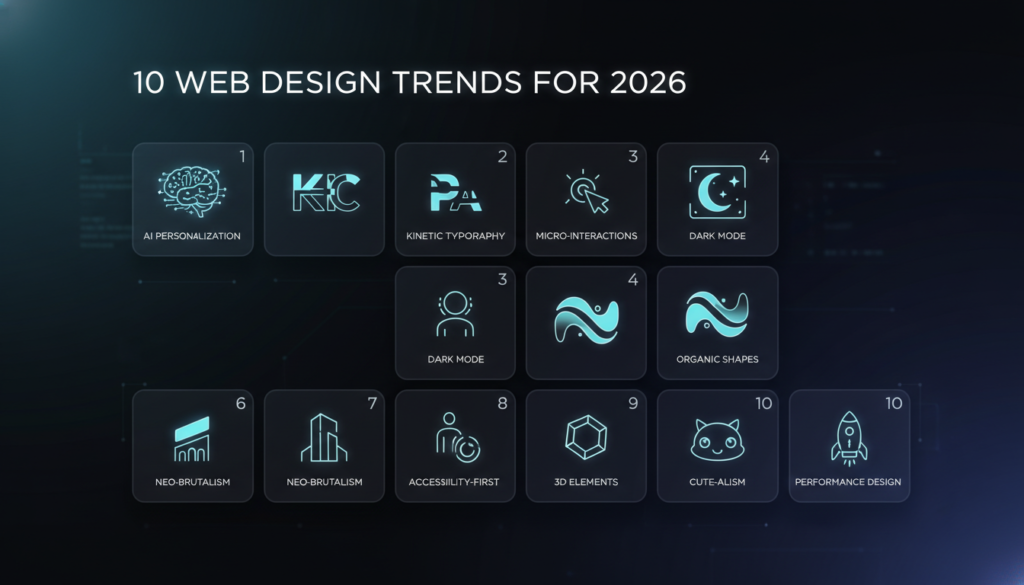
One of the most transformative web design trends in 2026 is AI-powered personalization. Instead of showing every visitor the exact same content, your website uses intelligent algorithms to tailor the experience based on each user’s behavior, preferences, location, or history with your brand.
Think of it as a website that behaves like your best sales associate, one who already knows what the customer is looking for and guides them there naturally.
This is not science fiction. It is already happening on the most successful websites in the world, and the tools to implement it are now accessible to businesses of all sizes.
Real-world examples of AI personalization in action:
• A homepage hero banner that changes based on whether the visitor is new or returning
• Product or service recommendations based on what a visitor has previously browsed
• AI-powered chatbots that answer questions instantly, 24 hours a day, in a conversational tone
• Dynamic calls to action that change based on how far down the page a visitor has scrolled
• Location-based content that adjusts language, currency, or offers based on where the visitor is
The businesses that implement AI personalization in 2026 will see higher engagement, lower bounce rates, and better conversion rates because every visitor feels like the site was built specifically for them.
Words do not have to sit still on a screen anymore. Kinetic typography text that animates, moves, or transforms as users scroll or interact with a page is one of the most visually powerful web design trends of 2026.
Combined with variable fonts, which can dynamically shift weight, width, and style depending on context, this trend gives businesses a way to make their brand message unforgettable from the very first second.
You do not need flashy graphics or expensive photography to make an impact. Bold, dynamic text that speaks directly to your audience can carry a homepage all on its own.
Why kinetic typography works so well:
• It captures attention in the critical first 3 seconds before a visitor decides to stay or leave
• Animated text directs the eye exactly where you want it to go
• Variable fonts improve readability across all screen sizes, from desktop monitors to small smartphones
• Bold typography communicates confidence and brand personality without relying on images
From a luxury fashion brand with elegant, slow-moving text to a tech startup with sharp, fast-sliding headlines, kinetic typography can be adapted to fit any brand voice. The key is matching the motion to the message.
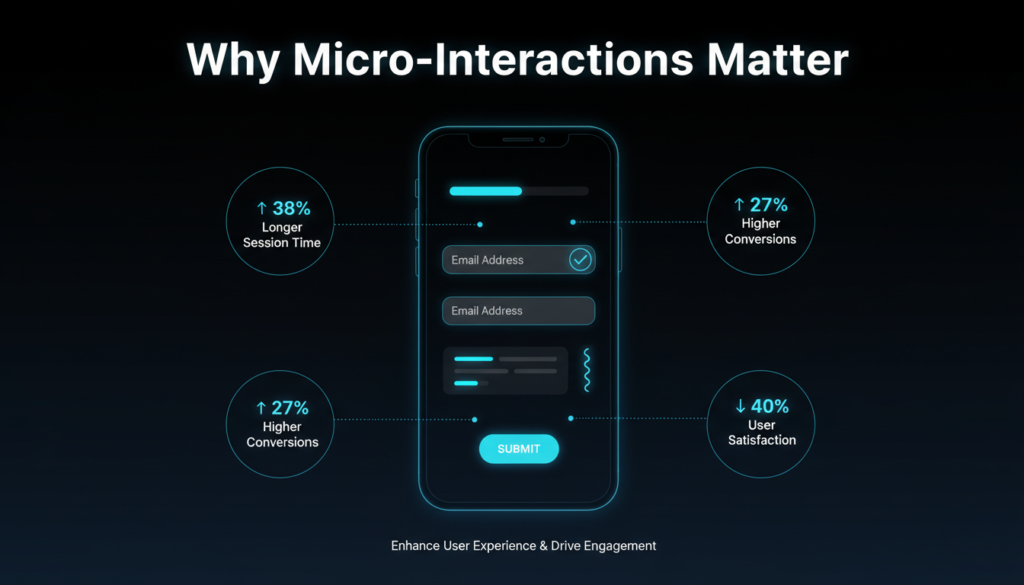
Have you ever hovered over a button and noticed it subtly changes color, or submitted a form and seen a small animated checkmark confirm your submission? Those are micro-interactions, and they are one of the most impactful yet underappreciated website design trends of 2026.
Micro-interactions are tiny visual responses that give users immediate feedback. They tell visitors: yes, that worked. Yes, you are in the right place. Yes, this website is paying attention to you.
When these small moments are thoughtfully designed, they transform a website from something that just delivers information into something that genuinely feels good to use. And a website that feels good to use keeps visitors around longer, which directly improves your conversion rates.
Common micro-interactions that make a real difference:
• Buttons that fill with color, expand slightly, or shift when clicked
• Navigation menus that open and close with smooth, purposeful animations
• Form fields that gently highlight when active and clearly signal errors
• Loading indicators that keep users informed instead of leaving them staring at a blank screen
• Scroll-triggered animations where content fades or slides in as the visitor moves down the page
• Thumbs-up or heart animations on social actions that make engagement feel rewarding
Motion design, the broader discipline behind micro-interactions, also includes transitions between pages, animated illustrations, and scroll-based storytelling. Used with restraint and intention, it is one of the clearest signals that a website is professionally crafted.
Dark mode has fully matured from a novelty feature into a mainstream expectation. In 2026, a significant portion of internet users browse with dark mode enabled on their devices, and they expect websites to honor that preference automatically.
Dynamic theming takes this one step further: your website detects the user’s system preference and delivers the right version, light or dark, without requiring any manual switching. It is a small technical touch that sends a clear message: this website was built with the user in mind.
Beyond just flipping colors, a well-executed dark mode design requires careful attention to contrast, readability, and the way images and graphics appear on darker backgrounds. Done poorly, dark mode can look washed out or hard to read. Done well, it looks sophisticated and intentional.
Who benefits most from dark mode design:
• Tech companies and SaaS products where users spend hours in the interface
• Entertainment, gaming, and media brands where dark aesthetics enhance the mood
• Nightlife venues, music platforms, and creative agencies
• Any business whose audience skews younger and more digitally native
For businesses where light mode is the primary experience, offering a seamless dark mode alternative is still a strong signal of quality. It tells your visitors that you have thought about their comfort, and that kind of attention to detail builds brand credibility.
The internet has a template problem. Millions of websites built on the same platforms with the same themes all end up looking remarkably similar: boxy grids, predictable columns, identical section patterns. In 2026, one of the strongest web design trends pushing back against this is the rise of organic shapes and anti-grid layouts.
Instead of rigid rectangles, imagine flowing curves that separate sections. Instead of straight-line columns, picture asymmetrical compositions where images overlap text and elements break outside their expected boundaries. This kind of layout feels human, crafted, and alive, not machine-generated.
For any business that wants to stand out in a crowded digital space, organic layouts are a powerful differentiator. They signal that your brand has a genuine creative identity, not just a monthly subscription to a website builder.
How to use organic shapes effectively:
• Use curved or wave-shaped section dividers instead of flat horizontal lines
• Allow images to overlap text blocks or bleed into adjacent sections
• Mix vertical and diagonal layouts to create visual rhythm and flow
• Pair organic shapes with generous white space so the design breathes
• Ensure the layout still guides the eye naturally toward your calls to action
The goal is not chaos, as it is controlled creativity. An organic layout should feel intentional at every turn, not like someone accidentally moved elements around.
Neo-brutalism is one of the most polarizing web design trends of 2026 and also one of the most memorable. Inspired by brutalist architecture and raw, unpolished visual aesthetics, it embraces thick borders, stark color contrasts, exposed layouts, and design choices that feel deliberately “imperfect.”
It is the design equivalent of a raw concrete wall or an exposed brick building: unfinished-looking on the surface, but deeply intentional underneath. When executed with skill, neo-brutalist websites are impossible to forget.
This is not a trend for every brand. But for the right businesses, it is a powerful way to communicate authenticity, confidence, and a refusal to blend in.
Brands that often benefit from neo-brutalism:
• Creative agencies, design studios, and art directors
• Independent music labels, podcasts, and media brands
• Fashion brands and streetwear labels targeting younger demographics
• Technology startups that want to signal disruption and boldness
• Artists, photographers, and portfolio websites
The key distinction between effective neo-brutalism and just bad design is intention. Every raw element, every bold border, every clashing color should be there for a reason. The best neo-brutalist websites feel like they were designed by someone who knows all the rules and chose to break them deliberately.
Accessibility is no longer optional in 2026. Across major markets worldwide, regulations requiring digital accessibility are being enforced more strictly than ever, in line with WCAG Accessibility Guidelines and beyond legal compliance, accessibility-first design is simply the right thing to do.
An accessible website works for users with visual impairments, hearing difficulties, motor challenges, and cognitive differences. When your website works for everyone, it also tends to work better for everyone because the principles of accessible design overlap heavily with the principles of good UX design.
There is also a strong SEO argument for accessibility. Search engines like Google favor websites with clear structure, proper heading hierarchies, descriptive image alt text, and fast, clean code, all of which are core requirements of accessible design.
Key accessibility features every business website should implement in 2026:
• Sufficient color contrast between text and backgrounds (minimum 4.5:1 ratio)
• Descriptive alt text on all images and graphics
• Full keyboard navigation supports every action possible without a mouse
• Captions and transcripts for video and audio content
• Clear, logical heading structure (H1, H2, H3) throughout the page
• Forms that clearly identify required fields and describe errors helpfully
• Resizable text that does not break the layout when zoomed in
Sites N Apps builds accessibility compliance into every project from day one. It is never an afterthought because an inaccessible website is not just a legal risk; it is a missed opportunity to connect with a wider audience.
3D design on websites is no longer reserved for technology giants with massive development budgets. In 2026, lightweight 3D elements, interactive product models, depth-layered hero sections, and subtle parallax effects will be accessible to businesses across all industries and price points.
The key shift in 2026 is performance. Earlier generations of 3D web design were often slow and device-unfriendly. Modern techniques using WebGL, CSS 3D transforms, and optimized 3D assets make it possible to create genuinely immersive experiences without sacrificing load times or mobile compatibility.
Industries where 3D design has the highest impact:
• E-commerce interactive 360-degree product views that let shoppers examine items from every angle
• Real estate and architecture virtual walkthroughs and floor plan explorations
• Manufacturing and product companies detailed 3D product demonstrations
• Gaming and entertainment fully immersive landing experiences
• Education and training platforms 3D visualizations of complex concepts
How to use 3D wisely in 2026:
• Choose lightweight WebGL or CSS 3D effects over heavy video files
• Use 3D as a supporting element, not the entire page; it should enhance, not distract
• Test rigorously across devices and connection speeds before launching
• Always pair immersive visuals with clear calls to action so visitors know what to do next
The goal is immersion with purpose. A 3D element that makes a visitor say ‘wow’ is only valuable if it also moves them closer to converting.
Not every brand needs to be edgy, minimal, or avant-garde. For a wide range of businesses from local bakeries and wellness studios to children’s brands and gift shops, warmth, approachability, and a human touch are the most powerful design qualities a website can have.
Cute-alism combines soft, pastel color palettes, rounded shapes, playful illustrations, and friendly typography to create websites that feel instantly inviting. Light skeuomorphism layers in subtle real-world textures, paper, fabric, and soft shadows, giving digital elements a tactile, familiar quality that resonates with users on an emotional level.
This is one of the most conversion-focused web design styles available for businesses where trust, warmth, and first impressions matter most. A visitor who feels comfortable on your website is far more likely to take the next step, whether that is booking an appointment, making a purchase, or filling out a contact form.
Business types that benefit most from cute-alism and skeuomorphic design:
• Bakeries, cafes, dessert brands, and artisan food producers
• Children’s education, toys, and family-focused services
• Wellness, yoga, mental health, and self-care brands
• Florists, gift shops, and specialty boutiques
• Pet services, veterinary practices, and animal care brands
• Personal finance tools and apps targeting everyday consumers
In markets where multiple competitors offer similar products or services, the business with the warmer, more inviting website often wins because emotion drives decisions far more than logic.
Here is a hard truth that many business owners do not fully appreciate: your beautiful, trend-forward website might be losing you customers every single day simply because it loads too slowly.
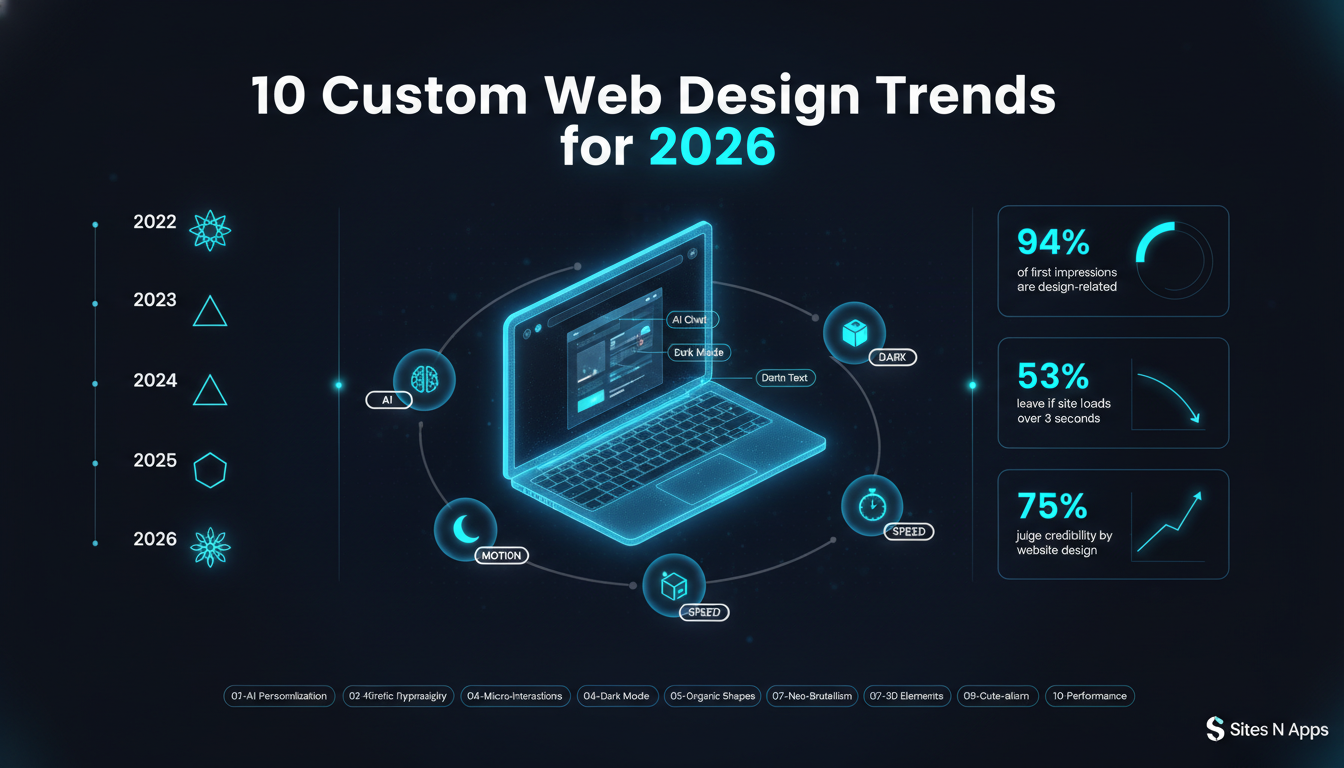
Google has made page speed a direct ranking factor. Research consistently shows that websites taking more than 3 seconds to load lose nearly half their visitors before those visitors have seen a single piece of content. And Google’s Core Web Vitals, a set of speed, responsiveness, and visual stability metrics,s now directly influence how high your website appears in search results.
Performance-driven design means every creative decision is made with speed and efficiency in mind. This is not about making websites look plain. It is about making them fast AND visually excellent at the same time,e which requires real skill and intentionality.
What performance-driven design looks like in practice:
• Next-generation image formats (WebP, AVIF) that are significantly smaller than traditional JPEGs without visible quality loss
• Lazy loading images and videos only load when a visitor actually scrolls to them
• Minimal reliance on heavy third-party scripts, plugins, and tracking codes
• Clean, efficient code without unnecessary bloat or redundant libraries
• Fast, reliable hosting infrastructure built specifically for performance
• Content Delivery Networks (CDNs) that serve your website from servers closest to each visitor
At Sites N Apps, performance is built into the foundation of every website we create, not added as an afterthought. Because a stunning website that nobody can load is, ultimately, just an expensive digital decoration.
With 10 trends on the table, the natural question is: where do I start? The answer is always the same: start with your customers and your business goals, not the trends themselves.
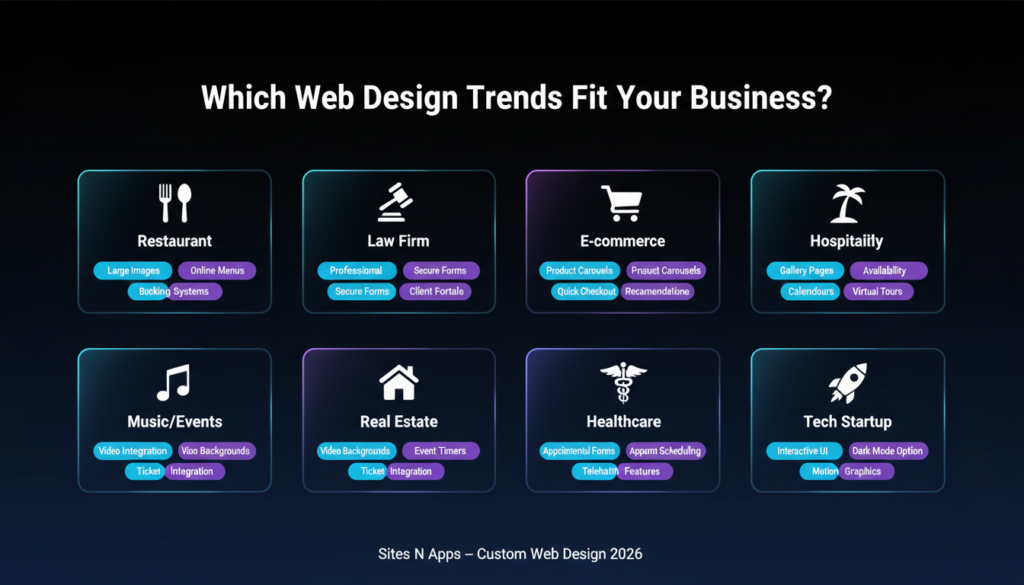
Trends are tools. The right tool depends on the job. Use this table to quickly identify which 2026 web design trends are most relevant to your specific business type:
| Business Type | Top 3 Recommended Web Design Trends |
| Restaurant / Food & Beverage | AI Personalization, Kinetic Typography, Performance-Driven Design |
| Law Firm / Professional Services | Accessibility-First, Dark Mode, Clean Bold Typography |
| Retail / E-commerce / Boutique | Cute-alism, Organic Shapes, Micro-Interactions |
| Tourism / Hospitality / Hotels | 3D Visuals, AI Personalization, Immersive Scrolling |
| Music / Entertainment / Events | Neo-Brutalism, Kinetic Type, Dark Mode |
| Real Estate / Architecture | 3D Elements, Performance Design, Organic Layouts |
| Healthcare / Wellness / Spa | Accessibility-First, Cute-alism, Micro-Interactions |
| Tech / SaaS / Startups | AI Personalization, Variable Fonts, Performance Design |
The most important principle here is focus. You do not need to implement all 10 trends to have a world-class website in 2026. Pick 2 or 3 that genuinely align with your audience and your business goals and execute them with real attention to detail. A focused, well-crafted website will always outperform a cluttered one trying to do everything at once.
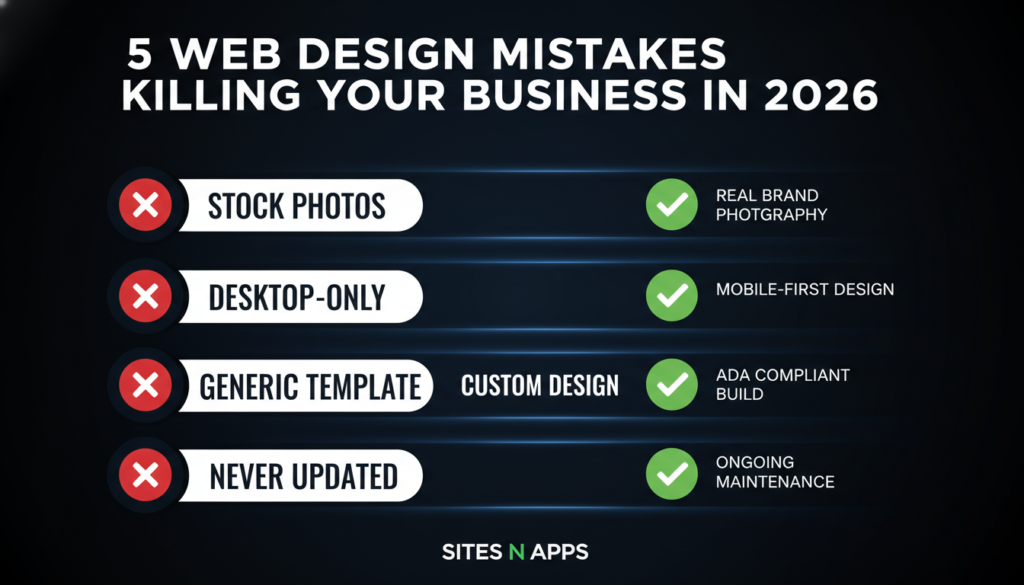
Knowing what to embrace is only half the picture. Knowing what to avoid is equally important. Here are the most common web design mistakes that quietly cost businesses customers and rankings every year.
Mistake 1: Relying on Generic Stock Photography
Visitors recognize stock photos immediately, and they erode trust just as quickly. Authentic imagery of your real team, your actual products, and your genuine workspace builds credibility that no stock photo library can replicate. In 2026, original photography and custom illustration are non-negotiable for businesses serious about their digital presence.
Mistake 2: Treating Mobile as an Afterthought
More than 60% of global web traffic comes from smartphones. If your website was designed for desktop first and adapted for mobile late,r or worse, never adapted at all, then you are delivering a poor experience to the majority of your visitors. Mobile-first design is not a trend anymore. It is the baseline.
Mistake 3: Using Templates That Were Not Built for Your Brand
Template websites can get you online quickly, but they come with a hidden cost: they look like every other template website. Generic layouts, predictable section patterns, and borrowed design elements make it nearly impossible for your brand to stand out. Custom web design gives you a visual identity that is entirely your own.
Mistake 4: Ignoring Accessibility Requirements
Accessibility compliance is increasingly enforced through legal action in markets around the world. Beyond the legal risk, an inaccessible website excludes a meaningful portion of your potential audience and hurts your SEO rankings at the same time. Accessibility is not an optional add-on. It is a core requirement of professional web design.
Mistake 5: Launching and Never Updating
A website is not a one-time project; it is a living business asset that needs regular attention. Stale content, outdated design, broken links, and declining page speed are all signs of a neglected website. The businesses with the strongest online presence treat their websites as ongoing investments, not finished products.
Inspired by the trends above? Here is a practical, actionable plan to bring your website into 2026 with confidence.
• Step 1: Audit Your Current Website. Use free tools like Google PageSpeed Insights, WAVE (for accessibility testing), and GTmetrix to get an honest baseline reading. Identify your biggest pain points: slow load times, mobile issues, accessibility failures, or outdated design.
• Step 2: Define Your Business Goals. Are you trying to generate more leads? Drive e-commerce sales? Build brand awareness? Your goals should drive every web design decision. Trends are only useful when they serve a specific business outcome.
• Step 3: Choose 2-3 Relevant Trends. Use the table in the previous section to identify which trends align best with your industry and audience. Commit to implementing those well rather than attempting everything at once.
• Step 4: Partner With the Right Web Design Team. Custom web design requires real expertise. Work with a team that understands both design and business strategy, not just aesthetics. Explore our custom website design services at Sites N Apps, built to perform, not just to look good.
• Step 5: Set a Realistic Timeline and Budget. A professional custom website typically takes 4 to 8 weeks from kickoff to launch. The investment varies depending on complexity, number of pages, and custom features required,d but the ROI of a high-performing website compounds significantly over time.
• Step 6: Plan for Ongoing Maintenance. Schedule quarterly reviews of your website’s performance metrics. Refresh content regularly, update visuals seasonally, and stay informed about emerging web design trends each year. Your website should grow alongside your business.
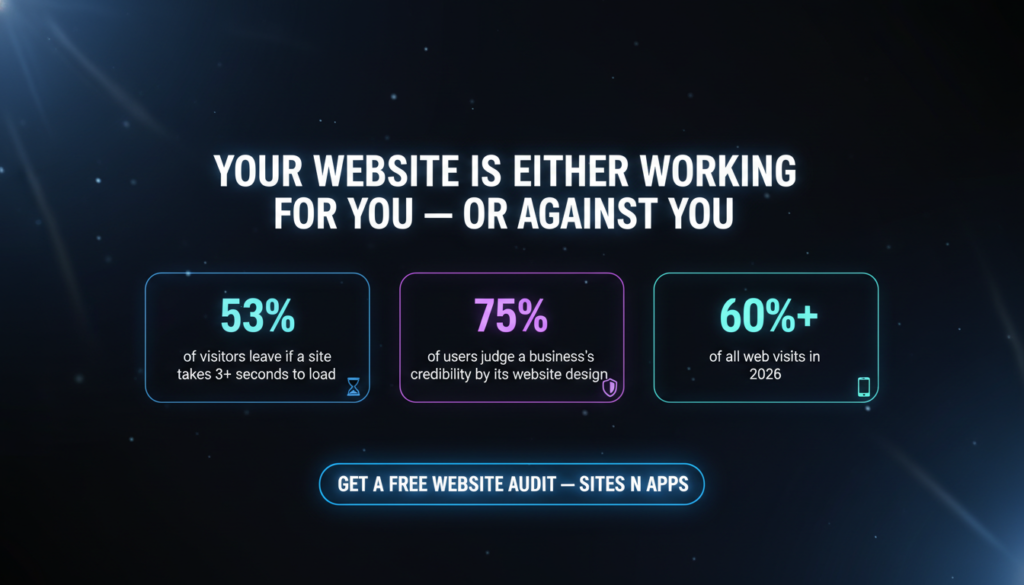
If your website is more than 3 years old, it is almost certainly costing you business. Web design trends are not just about visual style; they directly affect your site’s speed, mobile usability, accessibility, and search engine rankings. Staying current is a business decision with measurable financial impact.
Performance-driven design, specifically Core Web Vitals and mobile speed, has the most direct and measurable impact on Google search rankings. A fast, mobile-optimized website is the foundation that every other trend must be built on. Without it, even a beautiful design cannot fully compensate.
Most custom website redesigns take between 4 and 8 weeks from the initial kickoff meeting to launch. The timeline depends on the number of pages, the complexity of custom features, how quickly content and assets are provided, and whether integrations like e-commerce, booking systems, or CRM connections are required.
Investment varies significantly based on the scope, complexity, and features of the project. What matters most is thinking about your website as a long-term business asset, not a one-time expense. A well-designed, high-performing website consistently delivers returns through increased traffic, better conversion rates, and stronger brand credibility.
Absolutely. Sites N Apps is a custom web design company that specializes in building high-performance, trend-forward websites for businesses across industries. Whether you need a full redesign or strategic improvements to your existing site, our team combines design expertise with business strategy to deliver real results.
The best websites in 2026 do both. Timeless design principles, clear hierarchy, strong typography, intentional use of space, and fast performance form the foundation. Trends are layered on top to keep the experience current and engaging. At Sites N Apps, we design websites that feel fresh today and age gracefully over time.
The web design trends of 2026 are not just about aesthetics. They are about building digital experiences that are faster, smarter, more inclusive, and more personal experiences that turn casual visitors into loyal customers and first-time browsers into long-term clients.
Whether it is AI-powered personalization that speaks directly to each visitor, kinetic typography that makes your brand impossible to ignore, performance-driven design that keeps you ranking high in search results, or accessibility-first principles that open your doors to every potential customer, each of these trends represents a real, measurable opportunity for business growth.
The businesses that invest in modern, custom web design in 2026 will not just look better than their competitors. They will rank higher, convert more visitors, and build stronger customer relationships online, creating a compounding advantage that grows more powerful every year.
The question is not whether you can afford to update your website. It is whether your business can afford the cost of not doing so.