
Home / Blog Details
Take your digital marketing to the next level with data-driven strategies and innovative solutions. Let’s create something amazing together!
From Google search results to AI chatbots, we optimize your website so customers can find you faster — and choose you over competitors.
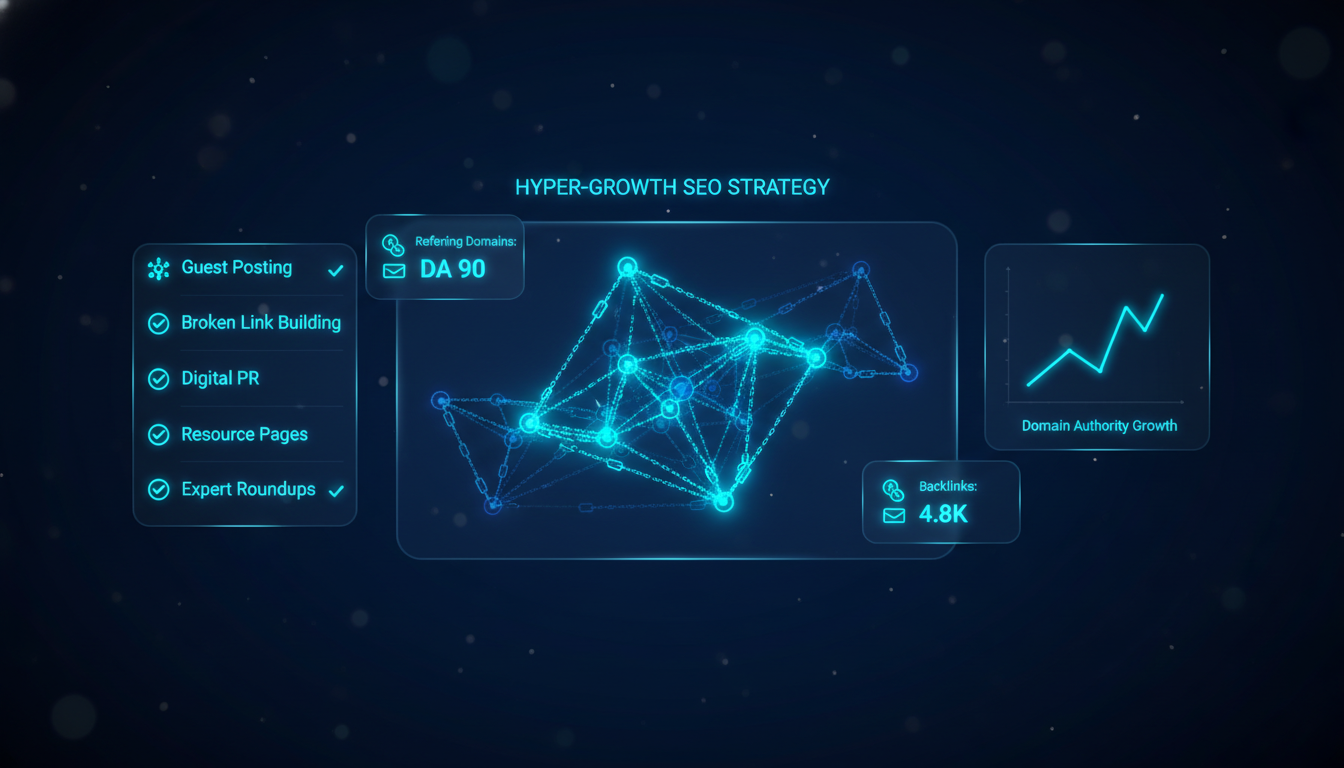
Backlink building strategies are methods used to earn links from other websites back to yours, signaling trust and authority to search engines. The most effective strategies focus on relevance, editorial quality, and genuine value exchange rather than volume. Done right, backlinks remain one of the strongest ranking signals in Google’s algorithm.
If you have spent any time researching SEO, you have heard that backlinks matter. But knowing they matter and knowing how to actually earn them are two very different things.
Backlink building strategies are the specific, repeatable methods marketers and SEO professionals use to get other websites to link back to their pages. These strategies range from producing original research that earns organic links to directly reaching out to website owners with a clear value proposition.
Backlink building: the process of earning or acquiring hyperlinks from external websites that point to pages on your own domain. Each link acts as a vote of confidence in your content. The more credible websites that link to you, the more authority your site carries in the eyes of search engines.
There are two broad approaches. Passive link earning happens when your content is so strong that other sites link to it without outreach. Active link building involves proactively identifying opportunities and contacting website owners to request or pitch a link.
Most effective strategies combine both.
Google has confirmed that backlinks are among its top three ranking factors, alongside content and RankBrain. According to a large-scale study by Ahrefs, pages with more referring domains consistently rank higher than pages with fewer, regardless of how strong the content is on its own.
The reason is simple. Search engines cannot interview your writers or verify your credentials. They rely on signals from other websites to determine whether your content is trustworthy. When a respected publication links to your page, it tells Google that your content is worth surfacing.
For businesses investing in SEO optimization, backlinks are not optional; they are the fuel that helps great content actually rank.
Not all links carry the same weight. Google evaluates backlinks on several dimensions:
Google’s systems have become sophisticated enough to detect patterns that look manipulative. Authentic, contextually relevant links always outperform artificially inflated ones.
Quantity used to be the game. A decade ago, SEOs competed to build the most links regardless of source. Google’s Penguin algorithm update changed that permanently. Today, one excellent link beats one hundred mediocre ones.
Relevance and authority both matter, and the ideal backlink has both. Topical relevance means the linking website covers subjects closely related to your content. If you run an HVAC company and a home improvement publication links to your guide on AC installation, that link is topically relevant and carries meaningful weight.
Topical authority goes further. Sites that are recognized as authoritative within a specific niche, such as Search Engine Journal for SEO or WebMD for health, pass concentrated authority to the pages they link.
Domain authority (DA) is a third-party metric, originally developed by Moz, that estimates how likely a website is to rank well based on its backlink profile. While Google does not use DA directly, the underlying factors it measures, referring domains, link quality, and site age, do influence PageRank, which Google does use.
As a practical guide, prioritize links from sites with a DA of 40 or higher, with extra weight given to anything above 70.
Editorial link: a link placed at the editorial discretion of the site owner because your content genuinely adds value to their audience.
Artificial link: a link placed in exchange for payment, reciprocal linking arrangements, or link schemes, without genuine editorial judgment.
Google’s guidelines are clear: artificial links violate its policies and can result in manual penalties. Editorial links, even if you influenced them through outreach, are the goal.
DoFollow links pass PageRank, the authority signal Google uses in its ranking algorithm. NoFollow links include a tag that tells Google not to pass PageRank.
That said, a natural backlink profile contains both. A site with only DoFollow links can look suspicious. NoFollow links from high-traffic sites can still drive referral visitors to your pages and contribute to brand visibility.
The short answer: pursue DoFollow links actively, but do not turn down a NoFollow link from a relevant, high-authority source.
Jumping into outreach without preparation wastes time and produces thin results. Before you send a single email, complete these three foundational steps.
Your competitors have already done the prospecting work for you. Use tools like Ahrefs, Semrush, or Moz to pull the full backlink profiles of your top three to five organic competitors.
Look for patterns. Which types of sites link to them most often? Which pages earn the most links? Are there link sources that link to multiple competitors, but not to you? These gaps are your most actionable opportunities.
Before building new links, understand what you have. Run your domain through a backlink analysis tool and note:
If you find a cluster of low-quality links pointing to your site, consider submitting a disavow file to Google Search Console before you begin a new campaign.
Vague goals produce vague results. Set specific, measurable targets before you start:
Without benchmarks, you cannot know whether your strategy is working or where to adjust.
The most efficient link building happens when your content is so genuinely useful that other sites want to reference it. These assets do not just earn links; they earn links repeatedly over time.
Original research is among the most consistently linked-to content types on the web. When you publish data no one else has, journalists, bloggers, and industry publications need to cite you to reference it.
You do not need a research team or a large budget. Survey your existing customers, compile publicly available data into a novel analysis, or run an experiment in your own business and document the results. A study showing that, for example, local businesses with five or more citation sources see 30% higher map pack visibility gives other writers something concrete to link to.
Ultimate guides earn links because they save curators the work of finding ten different resources. The key is depth and specificity. A generic “intro to SEO” guide earns few links in 2025. A “complete guide to HVAC SEO for small contractors in the Gulf South” earns links from trade publications, local business blogs, and industry associations.
Structure matters too. Tables of contents, anchor links, downloadable summaries, and clear section breaks make guides easier to reference and cite.
Free tools convert passive readers into active users, and active users share. A backlink opportunity calculator, a content brief generator, or an SEO audit checklist embedded on your site will attract links from bloggers who recommend tools to their audiences.
The development investment pays off repeatedly. One well-built tool can earn hundreds of referring domains over its lifetime with zero additional outreach.
Yes, and they are underused by most marketing agencies. Data roundup pages compile verified statistics from multiple sources into a single reference page. Writers searching for stats on a topic land on your page instead of visiting ten different sources, and many will link to it as their primary reference.
Update these pages at least once a year. Stale statistics lose their link-earning power as newer data becomes available.
The infographic boom of 2012 is long over, but well-designed, data-rich visual content still earns links. The difference today is quality. Generic stock-photo-style infographics get ignored. Custom-designed visuals that present original data, process flows, or comparison frameworks in a way that is genuinely clearer than text earn placement on resource pages and editorial blogs.
Pair every infographic with an embed code that includes a pre-written attribution link back to your page.
Interactive charts and data visualizations serve a similar function. When you publish the original visualization, anyone who references your data needs to link back to you as the source. Tools like Flourish or Datawrapper make it possible to build shareable, embeddable charts without a developer.
The best-performing visualizations are usually those that show trends over time or compare options side by side in a way that is hard to express in prose.
Beyond infographics and charts, any resource someone can embed on their own site represents a persistent link opportunity. Templates, printable checklists, branded visual glossaries, and comparison widgets all fall into this category.
Build the embed functionality so the code automatically includes a link back to your site. Every time someone uses your resource, your backlink count grows.
If your competitors are ranking above you, their backlinks are part of the reason. A structured gap analysis tells you exactly where to focus your energy.
Pull the referring domains for each of your top three to five competitors in your target keyword space. Export these lists and sort by domain authority. Focus first on the high-authority domains, those with a DA of 50 and above, and ask: Does this site link to my competitor because of their content quality, or because of a relationship or tactic I can replicate?
Categorize each link by type: editorial mention, guest post, resource page, directory, or partnership. This tells you which strategies your competitors are using most successfully.
In Ahrefs or Semrush, use the Link Intersect or Gap Analysis feature. Enter two to three competitor domains and filter for websites that link to all of them. These sites have already demonstrated a willingness to link to content in your niche.
They are your warmest prospects. A website that has linked to three of your competitors is far more likely to link to you than a site that has never mentioned your topic.
Not every gap is worth pursuing. Prioritize opportunities based on three factors:
Deprioritize links that came from personal relationships your competitor built over the years. Focus on linking sources that respond to quality content and clear outreach.
Your pitch should be short, specific, and focused on the recipient’s audience. Avoid templates that open with “I noticed you linked to [competitor].” Site owners receive hundreds of those.
Instead, lead with the specific value your content adds. Explain what your page covers that the existing linked resource does not, and make it easy for the site owner to see the upgrade. Include a direct link to your content. Keep the email under 150 words.
Broken link building is one of the most reliable white-hat tactics available because it benefits both parties. You help a site owner fix a problem; they give you a link.
Use a tool like Ahrefs or Screaming Frog to crawl resource pages, industry blogs, and link roundups in your niche. Filter for pages with broken outbound links (404 errors).
Alternatively, crawl your competitors’ backlink profiles for broken pages. If a page that earned 30 inbound links no longer exists, every site linking to it has a broken link problem you can solve.
Your replacement content does not need to be an exact replica of the dead page. It needs to serve the same purpose for the linking site’s audience, ideally, better.
If the broken page was a guide to local SEO for restaurants, create a more current, more detailed version. If it were a statistics roundup, compile fresh data. The goal is to give the site owner a reason to confidently swap in your link.
Be direct and helpful. Tell the site owner you noticed a specific broken link on their page (name it), briefly explain what it used to cover, and offer your page as a replacement. Do not ask; offer.
A good broken link email has three components: the problem (broken link), the impact (their readers hit a dead end), and your solution (here is a working replacement). Response rates for well-executed broken link outreach typically range from 5% to 15%.
Guest posting remains one of the most scalable link-building tactics when done with quality in mind. The key word is quality; low-effort posts on irrelevant sites produce no lasting benefit.
Search Google for queries like “[your niche] + write for us,” “[your niche] + guest post guidelines,” or “[your niche] + contribute an article.” Filter results by relevance first, then by authority.
Prioritize publications that have clear editorial standards, publish content regularly, and whose audience would genuinely benefit from your expertise. A guest post on a site with real readers in your niche is worth ten on a site that exists only to sell links.
High-value guest content is written for the host publication’s audience first, not for the link. That means following their style guide, matching their average word count, and covering a topic their readers have not seen covered in that way before.
Avoid the common mistake of submitting a lightly edited version of content already on your site. Editor’s notice. A unique, well-researched piece that earns editorial praise is more likely to be promoted by the host, which drives referral traffic to your site on top of the link.
Most publications allow one to two contextual links in the body of a guest post, plus a link in the author bio. Read their guidelines carefully and respect them.
Trying to pack in more links than allowed, or linking to pages that are not relevant to the article topic, can get your post rejected or your link removed after publication. Play the long game; a relationship with a good publication is worth more than one aggressively linked post.
Resource pages are curated lists of links on a specific topic. They exist specifically to point readers toward useful external content, which makes them ideal link targets.
For your content to earn placement on a resource page, it needs to be the best available resource on a specific subtopic. Generic pages rarely earn resource page links. Specific, well-organized, regularly updated pages do.
Think about what resource page curators are looking for: a page their visitors will actually use, that is not going to disappear, and that covers something their other listed resources do not.
Search for queries like “[your topic] + resources,” “[your niche] + useful links,” or “[your keyword] + helpful links.” You can also check competitor backlinks in Ahrefs and filter for pages with “resources” or “links” in the URL.
Look for resource pages that are actively maintained. A page last updated in 2018 is unlikely to add new entries. A page updated within the last year is a live opportunity.
Keep your pitch short and direct. Name the resource page, explain specifically why your content fits their list, and include the direct URL. Avoid lengthy introductions.
If the site has a contact form, use it. If it does not, find the site owner’s email through their About page, LinkedIn, or a WHOIS lookup. Follow up once after a week if you receive no response, then move on.
Some of the easiest links to earn are from organizations you already have a relationship with. Most businesses overlook this category entirely.
Yes, and this should be among your first steps. Vendors, suppliers, software providers, and professional services firms you work with often have partner pages, testimonial pages, or case study pages where they feature their clients.
Reach out and ask to be featured. Offer to write a brief testimonial in exchange for a link back to your site. This is a win for both parties: they get social proof, and you get a contextual link from a business site.
If you use a software product, subscribe to a service, or buy from a supplier, check whether they feature customer logos or case studies on their site. Submitting a short case study or testimonial, paired with a request for a link back to your site, is often the fastest way to earn a DA 60+ link with almost no outreach effort.
Industry associations almost universally maintain member directories with linked entries. Membership in a recognized trade organization earns you a directory listing with a backlink, usually from a high-authority domain that has existed for decades.
For marketing agencies, associations like the American Marketing Association (AMA) or local chapters of the Public Relations Society of America (PRSA) are worth exploring for both link and referral value.
Active participation in forums, Slack communities, LinkedIn groups, and industry Discords builds relationships that naturally lead to link opportunities. When community members see your expertise repeatedly, they cite your content, invite you to contribute to their publications, and recommend your resources to others.
This is a slower path, but the links it produces are among the most natural and editorially credible available.
Expert collaboration creates linkable content that multiple parties are motivated to promote, multiplying the reach of every piece you produce.
Expert roundup posts compile short quotes or insights from multiple industry professionals on a single topic. When you publish one and notify all contributors, most of them share the post with their own audiences and link back to it.
A roundup featuring 20 experts can earn 10 to 15 organic backlinks from the contributors’ own sites before you send a single outreach email. Request a specific, short answer (two to three sentences) from each contributor to keep the post focused and easy to read.
Being interviewed by industry publications, podcasts, or YouTube channels earns backlinks from the host site, often accompanied by social promotion to a large audience. Position yourself as an available expert by updating your LinkedIn headline, maintaining an updated speaker bio, and responding promptly when publications reach out.
You can proactively pitch interview requests to podcast hosts and publication editors. A concise pitch that explains your specific area of expertise and proposes two or three concrete angles tends to perform well.
Co-creating content with a recognized expert in a complementary field increases the likelihood of earning links from their existing audience. A marketing agency collaborating with a CRM software founder on a guide to client retention, for example, opens the door to links from that founder’s audience, newsletter, and partner network.
Structure the collaboration so both parties contribute meaningfully, then both promote the finished piece. Attribution to multiple recognized contributors naturally attracts citations.
Digital PR earns the kinds of links that most other tactics cannot: editorial mentions from major publications with domain authorities above 80. These are among the most impactful links in SEO.
Services like HARO (Help a Reporter Out), Connectively, and Qwoted connect journalists with expert sources. Reporters post queries asking for expert commentary, statistics, or first-hand experience. When you respond with a strong quote, they often include it in their article with a link back to your site or author profile.
The key is speed and specificity. Respond within the first two hours of a query posting. Give the reporter a usable, quotable insight in two to four sentences. Vague responses get ignored; specific, confident ones get published.
If you have conducted original research or compiled proprietary data, pitch it as an exclusive to a relevant publication. Frame the story around the most surprising or counterintuitive finding, not the methodology.
Journalists need data-driven stories that their readers have not seen before. If you can offer that, along with a clear news hook and a well-packaged press release, publications from mid-tier trade blogs to major outlets will consider covering it.
Long-term relationships with editors and journalists produce more consistent link opportunities than one-off pitches. Follow the editors of your target publications on LinkedIn. Comment thoughtfully on their articles. Share their work. When you eventually pitch them, you are not a stranger.
Over time, becoming a trusted source for a publication produces recurring links, contributor opportunities, and editorial mentions without outreach.
You are almost certainly losing backlinks without knowing it. Recovering them is among the highest-ROI activities in link building because no new content creation is required.
Set up automated backlink monitoring through Ahrefs, Semrush, or Google Search Console. Most tools will send alerts when referring domains are lost or when a page with inbound links returns a 404 error.
Review your lost links monthly. Categorize them: some will be from sites that no longer exist, some will have been removed deliberately, and some will be the result of a technical issue on your end that you can fix.
An unlinked brand mention is when another site references your brand, product, or content by name but does not link to you. These are among the easiest links to earn because the site has already decided you are worth mentioning.
Use Google Alerts or Ahrefs Content Explorer to find unlinked mentions. Reach out to the site owner, thank them for the mention, and politely ask if they would be willing to add a link. Conversion rates on this outreach regularly exceed 20%.
If a page on your site that has earned inbound links returns a 404 error, those links are currently passing no value. You have several options:
Option two is usually the fastest. A well-placed 301 redirect recovers the link equity without requiring you to rebuild the page.
Anchor text, the clickable words in a hyperlink, sends relevance signals to Google. An imbalanced anchor text profile is one of the most common technical link-building mistakes.
Branded anchor text uses your business name as the link text. For example, “Sites N Apps offers SEO services in Lafayette” uses branded anchor text. Branded links are the safest and most natural-looking type. They signal legitimacy and are difficult to manipulate at scale, which is why Google weighs them favorably.
A healthy backlink profile is primarily composed of branded anchor text, with keyword-rich anchors making up a smaller percentage.
Partial-match anchor text includes your target keyword alongside other words. “Learn more about local backlink building strategies for small businesses” is a partial match for “backlink building strategies.”
Partial-match anchors are effective for communicating topical relevance without the risk that comes with exact-match anchors. Use them in editorial guest posts and resource page links where the surrounding context already establishes relevance.
Over-optimization happens when too many of your backlinks use the same exact keyword-rich anchor text. For example, if 40% of your referring domains all use the anchor “best SEO agency Lafayette LA,” that pattern looks manipulative to Google and can trigger ranking suppression.
Target an anchor text distribution that looks something like:
| Anchor Type | Target Percentage |
| Branded | 40–50% |
| Naked URL | 15–20% |
| Generic (e.g., “this article”) | 10–15% |
| Partial-match | 15–20% |
| Exact-match keyword | 5% or less |
Keep exact-match anchors rare. When in doubt, use branded or partial-match text instead.
A backlink profile that looks organic is one that Google rewards consistently. Profiles that look engineered get scrutinized.
Link diversity refers to the variety of domains, link types, and anchor texts pointing to your site. A site that receives links exclusively from one type of source, say, only guest posts or only directory listings, looks unnatural.
A diverse profile includes editorial mentions, directory citations, social signals, resource page links, partnership links, and organic in-content references from varied domains. Each type contributes differently to authority and relevance.
Link velocity: the rate at which your site acquires new backlinks over time. Sudden spikes, such as gaining 500 links in a week with no corresponding PR event, trigger algorithmic scrutiny.
Natural velocity follows a gradual upward trend with occasional spikes tied to content launches, press coverage, or major announcements. Consistency matters more than intensity. Building 10 solid links per month for 12 months produces far better results than 120 links in a single campaign burst.
The best backlink profiles blend high-authority links (DA 70+) from broad topics with highly relevant links from niche-specific sources at lower authority levels. Neither alone is optimal.
A link from Forbes to your marketing agency homepage is valuable for authority. A link from a local Lafayette business blog to your specific service page is valuable for local relevance. Both belong in a balanced profile. Pursue both types deliberately rather than chasing only the most prestigious sources.
For businesses serving a specific geographic area, local backlinks carry disproportionate weight in local search rankings, including Google Maps and local pack results.
Start with authoritative Louisiana-specific directories. The Louisiana Secretary of State’s business database, the Louisiana Economic Development directory, and regional chamber of commerce listings are all high-trust sources Google uses to verify local business legitimacy.
Ensure your name, address, and phone number (NAP) are identical across every directory listing. Inconsistent NAP data dilutes citation authority and can suppress local rankings.
Citations on platforms like Google Business Profile, Yelp, Bing Places, Apple Maps, and industry-specific directories (like Houzz for contractors or Avvo for attorneys) establish your business’s geographic and categorical relevance.
Each consistent citation reinforces to Google that your business is real, located where you say it is, and operating in the category you claim. According to Moz’s Local Search Ranking Factors research, citation signals remain among the top factors for local pack rankings.
Nonprofit organizations, local sports leagues, neighborhood associations, and community event organizers frequently maintain websites with partner and sponsor pages. Links from these organizations are trusted, locally relevant, and often from domains that have existed for many years.
Engage genuinely with community organizations rather than treating sponsorships as purely transactional. A sponsor relationship that includes an event, a social media mention, and a webpage credit produces more trust signals than a directory listing alone.
Yes, and this is one of the most overlooked local link-building tactics for small businesses. Lafayette hosts numerous annual events, from Festival International to the Cajun and Creole Festival. Sponsoring, even at a modest level, typically earns you a sponsor credit with a link on the event website.
Beyond direct links, event sponsorships create opportunities for local media coverage, social shares, and community mentions that compound over time.
Local news outlets like The Advocate, KATC, and KLFY maintain high-authority domains and publish business news, community profiles, and expert commentary regularly. Pitch a story angle tied to a genuine local development: a new service launch, a community initiative, or a data-backed perspective on a local business trend.
Build a relationship with local journalists before you need a link. Follow them, engage with their reporting, and be available as a knowledgeable local source. One well-placed local news mention can drive significant referral traffic and ranking improvements.
The Acadiana Press Club, the Southwest Louisiana SHRM chapter, the Acadiana Business Alliance, and similar regional professional organizations maintain member directories with linked entries. Joining these organizations earns you credible, locally relevant backlinks while also providing networking and referral opportunities.
Prioritize organizations whose membership includes your target clients or referral partners. The dual benefit of link equity and relationship building makes these among the highest-value investments for local businesses.
The Greater Lafayette Chamber of Commerce and the Broussard Chamber of Commerce both maintain member directories with linked business profiles. Chamber membership is typically tax-deductible as a business expense and produces a credible, locally recognized backlink.
Many chambers also offer guest speaking opportunities, newsletter features, and event partnerships that generate additional mentions and links from members and local media.
Every industry has its own ecosystem of directories, publications, and organizations that provide relevant, authoritative linking opportunities.
Industry-specific directories serve a dual purpose: they earn you a topically relevant backlink, and they put your business in front of potential clients actively searching for services in your category.
For marketing agencies, directories like Clutch, Agency Spotter, UpCity, and the HubSpot Agency Partner Directory are well-recognized, carry real domain authority, and are frequently visited by businesses seeking agency partners. Completing a full profile with client reviews increases both visibility and link value.
Niche resource pages are curated lists maintained by industry blogs, associations, or educators. A university marketing department might maintain a list of recommended SEO reading; an industry association might list recommended vendors.
Identify these pages through search queries like “[your niche] + recommended resources” or “[your niche] + tools and resources.” Reach out with your strongest content piece that genuinely fits their list, framed as a resource their audience would find useful, not as a link request.
Contributing to trade publications, participating in association surveys, or serving on committee panels within your industry creates citation opportunities that earn links from domains with long histories and established authority.
For marketing agencies, publications like Search Engine Journal, Marketing Land, and Content Marketing Institute accept contributed articles from practitioners. A single placement on one of these sites can earn a DA 80+ link and introduce your brand to tens of thousands of potential clients.
Not every strategy is equally suited to every business. The right mix depends on your size, resources, audience, and timeline.
Small businesses with limited time and budget should prioritize high-impact, low-effort strategies first:
These five tactics require minimal budget and produce links from credible, relevant sources with lasting value.
Local service businesses should concentrate their efforts where geographic relevance is highest:
Local link building compounds faster than national campaigns for businesses where geography determines client acquisition.
Established brands with existing authority can pursue higher-effort, higher-reward strategies:
Established brands can afford to invest in strategies that take three to six months to produce results because they have existing authority to support rankings in the interim.
Effort without measurement is guesswork. Track these metrics consistently to know whether your strategy is producing results.
Track total referring domains, not total backlinks. One domain linking to you 50 times counts as one referring domain. Growth in unique referring domains is a far more meaningful signal than raw link count.
Set a monthly baseline and track growth over rolling 90-day windows. Consistency of growth matters more than any single month’s spike.
Backlinks do not produce immediate traffic increases. Expect a lag of two to eight weeks between earning a significant link and seeing measurable ranking or traffic movement.
Track organic traffic trends for the specific pages you are building links to, not just your site overall. Page-level data isolates the impact of your link acquisition efforts more accurately.
Monitor keyword positions for the target pages in your campaigns. Use a rank tracking tool like Semrush, Ahrefs, or Accuranker to track weekly movement.
When a page climbs from position 12 to position 5 after earning a cluster of relevant backlinks, that is a direct performance signal. Document these correlations to refine your strategy over time.
After earning a link, verify it with your backlink tool. Confirm the link is live, is DoFollow (if relevant), points to the correct page, and uses appropriate anchor text. Check the DA of the referring domain against your target range.
Maintain a simple link acquisition log: date, referring domain, DA, anchor text, target page, and link type. This record helps you identify which outreach channels and content types produce the highest-quality links.
A backlink from a high-traffic source can drive meaningful referral visitors to your site, separate from the SEO benefit. Track referral traffic in Google Analytics by source and destination page.
High referral traffic from a backlink indicates that the linking site’s audience is genuinely interested in your content. That engagement signals quality to Google, reinforcing the link’s SEO value.
The wrong backlink tactics do not just fail to help; they can actively damage your rankings. Avoid these common mistakes.
Google’s link spam detection has improved significantly with the rollout of SpamBrain, its AI-powered spam detection system. Paid links from link farms, private blog networks (PBNs), or link brokers leave detectable patterns in your link profile.
A manual action from Google’s spam team can suppress your site’s rankings across all keywords, sometimes permanently. The short-term convenience of purchased links is never worth the long-term risk.
Exact-match anchor text over-optimization is one of the most common triggers for Penguin-related ranking suppression. If a high percentage of your inbound links all use the same keyword phrase as anchor text, Google interprets it as an artificial link scheme.
Diversify your anchor text profile proactively. If you notice an imbalance, shift your outreach requests toward branded or partial-match anchors until the ratio normalizes.
A link from an irrelevant site passes PageRank, but it does not reinforce topical authority. Worse, an excess of irrelevant links can dilute your site’s topical relevance signals, making it harder to rank for competitive keyword clusters in your niche.
Relevance should be the first filter you apply when evaluating any link opportunity. Authority second; relevance first.
Each of these tactics produces links that Google either ignores or actively penalizes. The time spent on them is almost always better invested in one well-executed outreach campaign.
The agencies and businesses that consistently outrank their competitors share a few common principles in how they approach link building.
Ten links from domains with a DA of 50 and genuine relevance will almost always outperform one hundred links from DA 10 directories. Quality links produce compounding authority. Low-quality links require ongoing management to avoid negative impact.
Set a personal threshold: if a link opportunity would not pass a simple editorial judgment test (would a trusted editor intentionally choose to link here?), decline it.
Google’s systems increasingly evaluate websites as topical entities, not just collections of pages. Sites that earn links primarily from topically related sources develop stronger cluster authority, which improves rankings across entire keyword families, not just individual pages.
When prospecting for link opportunities, filter by topic before filtering by authority. A lower-DA site in your exact niche is often more valuable than a high-DA generalist site.
A natural link profile reflects the organic way content spreads: a mix of editorial mentions, directory citations, resource page inclusions, social shares, and partner links. It includes DoFollow and NoFollow links. It has varied anchor text. It grows at a consistent, gradual pace with occasional spikes tied to real events.
If your link profile only contains one type of link from one category of site with highly similar anchor text, it does not look natural regardless of the DA scores involved.
No single link-building tactic produces sustainable results on its own. Guest posting alone saturates over time. Broken link building depends on finding fresh opportunities consistently. Digital PR requires continuous newsworthy output.
The agencies that win at long-term SEO combine four to six complementary strategies, rotate emphasis based on what produces results, and build link acquisition into their ongoing content production process rather than treating it as a separate campaign.
For a deeper look at how link building fits into a full SEO strategy, explore the comprehensive SEO services offered by Sites N Apps, built specifically to help Lafayette, LA, businesses grow their online visibility through sustainable, white-hat methods.
Backlink building strategies are not a one-time project. They are an ongoing system that, when built correctly, compounds in value every month.
Start with the fundamentals: audit your current profile, study your competitors’ link sources, and create one genuinely exceptional piece of content worth linking to. Then layer in outreach tactics, local link opportunities, and digital PR as your capacity grows.
The businesses earning the most organic traffic in 2025 are not the ones that built the most links. They are the ones who built the right links, consistently, over time, from sources that search engines trust.
If you are ready to build a backlink strategy that actually moves the needle for your Lafayette business, the digital marketing team at Sites N Apps is here to help. Contact us today to book a consultation and find out exactly where your backlink profile stands and what it will take to outrank your competitors.
Most SEOs observe a lag of two to eight weeks between earning a significant backlink and seeing measurable ranking improvement. High-authority links from trusted domains tend to produce faster movement. Pages in competitive niches may take longer to respond, particularly if they are not yet in Google’s top 50 for their target keywords.
There is no universal number. What matters is ranking relative to your competitors. Use a tool like Ahrefs or Semrush to check how many referring domains the top five results for your target keyword have. That benchmark, not an arbitrary number, should guide your link-building targets.
Yes, for two reasons. First, a natural link profile includes nofollow links, so having some is healthy. Second, nofollow links from high-traffic sites can drive meaningful referral visitors to your site. The direct SEO value is limited, but the brand exposure and traffic contribution are real.
Focus exclusively on earning links through genuine value: original content, authentic outreach, real relationships, and legitimate partnerships. Avoid any tactic that involves paying for links, automated submissions, or schemes designed to manipulate anchor text ratios. Google’s quality guidelines provide a clear framework for what is and is not acceptable.
Yes, when done with quality in mind. Guest posts on relevant, authoritative sites with real readership produce editorial links that carry strong topical relevance signals. Guest posts on low-quality sites that exist only to sell links provide no lasting value and carry penalty risk. The difference is in the destination, not the tactic.
The most widely used tools among SEO professionals include Ahrefs (for backlink analysis and prospecting), Semrush (for competitor gap analysis and tracking), Moz (for DA scoring and local citations), Google Search Console (for monitoring your own backlink data), and Hunter.io or Voila Norbert (for email prospecting). Most professional campaigns use at least two of these in combination.
Struggling to compete for high-search-volume keywords? We help businesses like yours increase visibility, drive more traffic, and dominate competitive search terms—all while keeping your costs low. Our proven strategies focus on long-term growth and measurable results.