
Local search has changed completely. Today, when someone searches for “web design near me” or “Lafayette digital marketing,” they’re not just looking at Google Maps anymore. They’re getting answers from multiple sources, and your business needs to show up everywhere.
Local SEO means making your business easy to find when people search for services in your area. It’s about being visible when customers are ready to buy, call, or visit your location.
In 2025, the game has shifted. Search engines now care more about understanding what your business actually does and how well you serve your community. They look at your online reputation, your content, and how active you are in responding to customers.
This guide covers the best local SEO strategies that will show you both the basic steps and the advanced tactics that most businesses miss. Whether you run a restaurant, law firm, or digital agency like SitesNApps in Lafayette, these strategies will help you dominate local search results.
Your Google Business Profile is the foundation of local visibility. But simply claiming your listing isn’t enough anymore. You need to treat it like a social media account that you update regularly.

Start by choosing the right business category. Your primary category should match exactly what you do. For a web design company, that might be “Website Designer” or “Internet Marketing Service.” You can add up to 9 secondary categories to cover all your services.
Look at what your top competitors are using. If three competing businesses in Lafayette all use “Marketing Agency” as a secondary category and rank well, you should probably add it too.
Google rewards businesses that stay active. Here’s what you should do:
Photos matter more than most people think. When someone searches on their phone, your images show up prominently. Use clear shots of your office, team, completed projects, and happy customers. Name your image files with location keywords like “lafayette-web-design-office.jpg” before uploading.
If you serve customers at their location rather than having them come to you, set up your service areas correctly. List every city, neighborhood, and zip code you serve. Don’t just say “Lafayette and surrounding areas.” Be specific: Lafayette 70501, 70502, 70503, Youngsville, Broussard, and Scott.
Reviews are the new word of mouth. They influence both human customers and search rankings. But getting reviews is only half the battle.

Getting 50 reviews in one month then nothing for six months looks suspicious. Instead, aim for a steady flow. If you’re a local business, try to get 3-5 new reviews every month. This consistent pattern tells Google your business is actively serving customers.
Monthly Review Goals by Business Size:
| Business Type | Monthly Review Target |
| Solo Service Provider | 2-3 reviews |
| Small Business (2-10 employees) | 5-8 reviews |
| Medium Business (11-50 employees) | 10-15 reviews |
| Large Local Business (50+ employees) | 15-25 reviews |
Don’t just ask customers to “leave a review.” Guide them gently. After completing a web design project, you might say: “If you’re happy with your new website, would you mind sharing which specific features you found most helpful?”
This encourages them to mention actual services like “responsive design,” “SEO optimization,” or “e-commerce setup” in their review. These keywords boost your relevance for those search terms.
Reply to every review, good or bad. Thank customers for positive reviews and address concerns in negative ones professionally. Your response shows potential customers how you handle problems. It also signals to search engines that you’re an engaged, legitimate business.
For negative reviews, follow this pattern:
Most businesses make their content too broad. They target “web design services” when they should target “web design services in Lafayette Louisiana” or even “web design in the Oil Center district.”
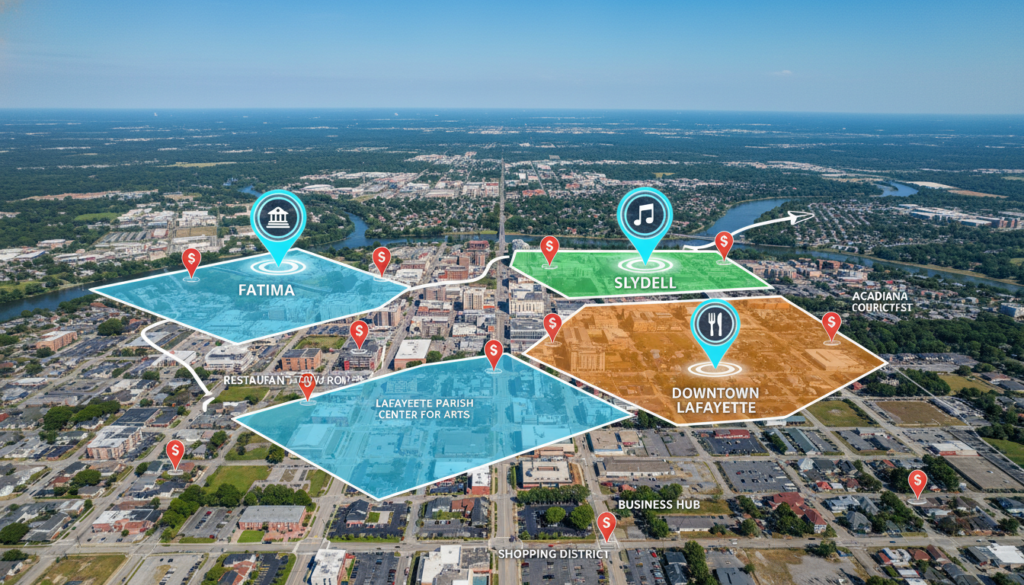
Create separate pages for each area you serve. Don’t just change the city name and copy the same content. Write unique information about each location:
For example, if Sites N Apps serves Lafayette, create pages like:
Each page should have 800-1,200 words of genuine, helpful content about serving customers in that specific area.
Look at what people ask about your services in your area. Type your main service plus your city into Google and scroll to the “People Also Ask” section. You’ll find questions like:
Create blog posts that answer these exact questions. Use the question as your H2 heading and provide a detailed answer. This helps you appear in featured snippets and voice search results.
Establish yourself as a local expert by writing about Lafayette:
This type of content does two things. First, it brings in local traffic from people researching the area. Second, it creates topical authority showing Google you’re genuinely connected to Lafayette.
Behind the scenes, there’s code on your website that helps search engines understand your business. Getting this right gives you an advantage over competitors who skip these details.

Schema markup is code that tells search engines exactly what your content means. For local businesses, you need LocalBusiness schema that includes:
You can add this code yourself or use plugins if you’re on WordPress. Google’s Rich Results Test tool will show you if it’s working correctly.
Your business name, address, and phone number (NAP) must match exactly everywhere online. If your Google Business Profile says “SitesNApps” but your website says “Sites N Apps,” that’s a mismatch. If your address includes “Suite 100” in one place but not another, that’s a problem.
Check these locations for consistency:
Even small differences like “Street” vs “St” or including/excluding suite numbers can hurt your rankings.
88% of local searches happen on mobile phones. If your website takes more than 3 seconds to load, people leave. Google knows this and ranks faster sites higher.
Test your mobile speed at Google PageSpeed Insights. Aim for a score above 80. Common fixes include:
Here’s where you separate yourself from competitors who follow basic checklists. These strategies require more work but deliver bigger results.
Local SEO for a law firm works differently than local SEO for a pizza restaurant. Understand what matters most for your industry:
High-Trust Industries (Lawyers, Doctors, Financial Advisors):
High-Speed Industries (Plumbers, Locksmiths, Towing):
Retail/Restaurant:
Most businesses only look at website visits. But what matters is how many customers you actually get from local search. Connect your online presence to real business outcomes:
Set up call tracking numbers specifically for your website so you know which visits turn into phone calls. Use Google Analytics to track form submissions. If you have a physical location, survey new customers asking “How did you find us?”
Track these numbers monthly:
This data helps you understand your return on investment and shows which tactics work best for your business.
If you’re in an area with Spanish speakers, Vietnamese communities, or other language groups, creating content in those languages can tap into underserved markets.
Lafayette has a significant French and Spanish-speaking population. A web design company could create:
Keep these pages genuinely helpful, not just machine-translated. Hire a native speaker to write or thoroughly review the content.
Your Google Local Services Ads and organic SEO work together. When you have strong organic rankings, your cost per lead often drops for paid ads because Google sees you as a relevant, quality business.
Conversely, running Local Services Ads can increase brand recognition. When someone sees your business in the ads, then later sees you in organic results and reviews, that repetition builds trust and increases click-through rates.
What other websites say about you matters just as much as what your own website says. Building connections across the web strengthens your local presence.

A link from the Lafayette Chamber of Commerce website is worth more for local rankings than a link from a national blog. Focus on getting mentions from:
Local News Sites:
Community Organizations:
Local Blogs and Influencers:
Earn these links by being newsworthy. Sponsor local events, offer free workshops, publish research about local business trends, or contribute expert opinions on relevant topics.
Fake competitor listings are a real problem in local search. Some businesses create multiple listings or use fake addresses to dominate the map pack. You can report these.
Check your top competitors on Google Maps. If you see:
Report them through Google Business Profile. Click the three dots on their listing and select “Suggest an edit” or use the feedback tool. Document everything with screenshots.
This isn’t being petty – it’s protecting legitimate businesses from cheaters who game the system.
Beyond Google, your business should appear in:
General Directories:
Industry-Specific Directories: For web design/digital marketing:
For other industries, find the top 3-5 directories where your competitors all have listings.
Local Directories:
Use exactly the same business information (NAP) on every single listing. This consistency helps search engines confidently verify your business details.
Local SEO isn’t a one-time project. It’s an ongoing conversation with your community and the search engines that serve them. The businesses that win at local search treat it like relationship building, not just technical optimization.
Daily Tasks (5 minutes):
Weekly Tasks (30 minutes):
Monthly Tasks (2-3 hours):
Quarterly Tasks (4-5 hours):
Winning local search comes down to three things: being genuinely helpful to your community, making it easy for search engines to understand your business, and staying consistently active.
You don’t need to do everything at once. Start with your Google Business Profile, get your website technically sound, then build from there. As a Lafayette business, your goal is to become the obvious choice when someone in your area needs your services.
Local SEO is no longer a one-time task. It’s a continuous neighborhood conversation. Show up, be helpful, prove your expertise, and the rankings will follow.
How long does it take to see results from local SEO?
Most businesses start seeing improvements in 3-4 months. Quick wins like optimizing your Google Business Profile might show results in 2-3 weeks. More competitive keywords in larger cities can take 6-12 months to rank well. The key is consistency – businesses that stick with it for a full year typically see the biggest gains.
Do I need to hire an agency or can I do local SEO myself?
Many small businesses can handle basic local SEO themselves – claiming listings, getting reviews, posting updates. However, technical aspects like schema markup, content strategy, and competitive analysis often benefit from professional help. Start with the basics yourself, then consider hiring help as your business grows.
How many reviews do I need to rank well locally?
There’s no magic number, but generally you want more reviews than your competitors. For most local businesses, having 50+ reviews with a 4.5+ average rating puts you in a strong position. More important than total number is getting consistent new reviews every month – aim for 5-10 monthly depending on your business size.
What’s the difference between local SEO and regular SEO?
Regular SEO focuses on ranking nationally or globally for general keywords. Local SEO targets “near me” searches and location-specific queries. Local SEO heavily weights your Google Business Profile, local citations, and proximity to the searcher. Regular SEO focuses more on domain authority and backlinks from any quality source.
How important are social media posts for local SEO?
Social media doesn’t directly impact rankings, but it supports your local SEO in important ways. Active social accounts build brand recognition, drive traffic to your website, and help you get more reviews. Plus, your social profiles often rank in search results for your business name, controlling more of that valuable first page.
Can I rank locally if I work from home?
Yes, but it’s more challenging. If you serve customers at their location (like a plumber or consultant), use a service area business profile instead of showing your home address. Focus heavily on content marketing, reviews, and building authority. You won’t appear in map results for “near me” searches as reliably, but you can still rank in organic results.
What should I do if a competitor has fake reviews?
Report obvious fake reviews through Google’s report process. Document why you believe they’re fake (all posted same day, generic language, reviewer profiles with no other reviews). However, spend most of your energy on getting your own legitimate reviews rather than fighting competitors. Ultimately, authentic customer feedback wins.
How often should I update my website content for local SEO?
Add something new at least monthly – a blog post, case study, or service page update. Search engines favor active websites that provide fresh information. Even updating old pages with new statistics, examples, or customer testimonials signals that your site is current and maintained.